
Summer Innovation Intensives


Academic Tracks and Future Builders Studio Descriptions
Engineering Operations: Data Science and Decision-Making
Instructors: Professor David Shmoys and Assistant Professor Omar El Housni
Ever wonder how Google Maps finds the fastest route? Or how Uber matches users with the perfect driver in seconds? What about how soccer teams decide who takes the penalty kick — or how governments draw up voting districts? Spoiler alert: It’s all powered by data science.
This course is a backstage pass to the algorithms and math behind the world’s smartest decisions. Students will dive into real-world problems, crunch massive datasets, and learn how engineers use math and code to solve everything from traffic jams to political puzzles.
This course is a launchpad for careers that shape the future. Whether a student is into tech, business, healthcare, or sports analytics, they will gain skills that open doors. If a student loves puzzles, patterns, or making smart decisions, this course is for them.
Interacting With AI: Understanding the Relationship Between AI and Humans
Instructors: Sterling Williams-Ceci and Madiha Choksi
Advisors: Associate Dean for Faculty Affairs and the Don and Mibs Follett Professor Mor Naaman, Professor Michael Macy, Andrew H. and Ann R. Tisch Professor Helen Nissenbaum
Have you ever wondered how AI tools like ChatGPT can affect not only those who choose to use them, but also those who refuse? In this three-week course, students dive into the world of AI to discover not just how it works, but also how it impacts people’s psychology, communication dynamics, and the content that spreads in online communities. Through presentations, discussions, and hands-on demos, students will be encouraged to share their own perspectives on how humans should respond to the growing use of AI in society. Students will consider how to balance AI’s benefits with humans’ agency and oversight. By the end of this course, students will have a greater understanding of AI’s impacts at multiple levels, from the individual to the societal.
Ethical Vibe Coding
Instructors: Hauke Sandhaus and Jonathan Segal
Advisors: Associate Professor Wendy Ju, Andrew H. and Ann R. Tisch Assistant Professor Angelique Taylor
These days, people can build apps with AI tools with the push of a button… but should they? In this three-week course, students will learn to “vibe code” real applications ethically. Students will explore bias in AI systems, test the limits and vulnerabilities of these tools, and perform hands-on design while centering human values. No programming experience is required: Students just need to bring their laptop, their questions about what “AI for good” really means, and their appetite for creative problem-solving. Join us to learn not only how to build applications quickly, but also how to build them right.
Future Builders Studio
Instructors: Charles H. Dyson Family Professor of Management Karan Girotra and Studio Chief of Practice Josh Hartmann
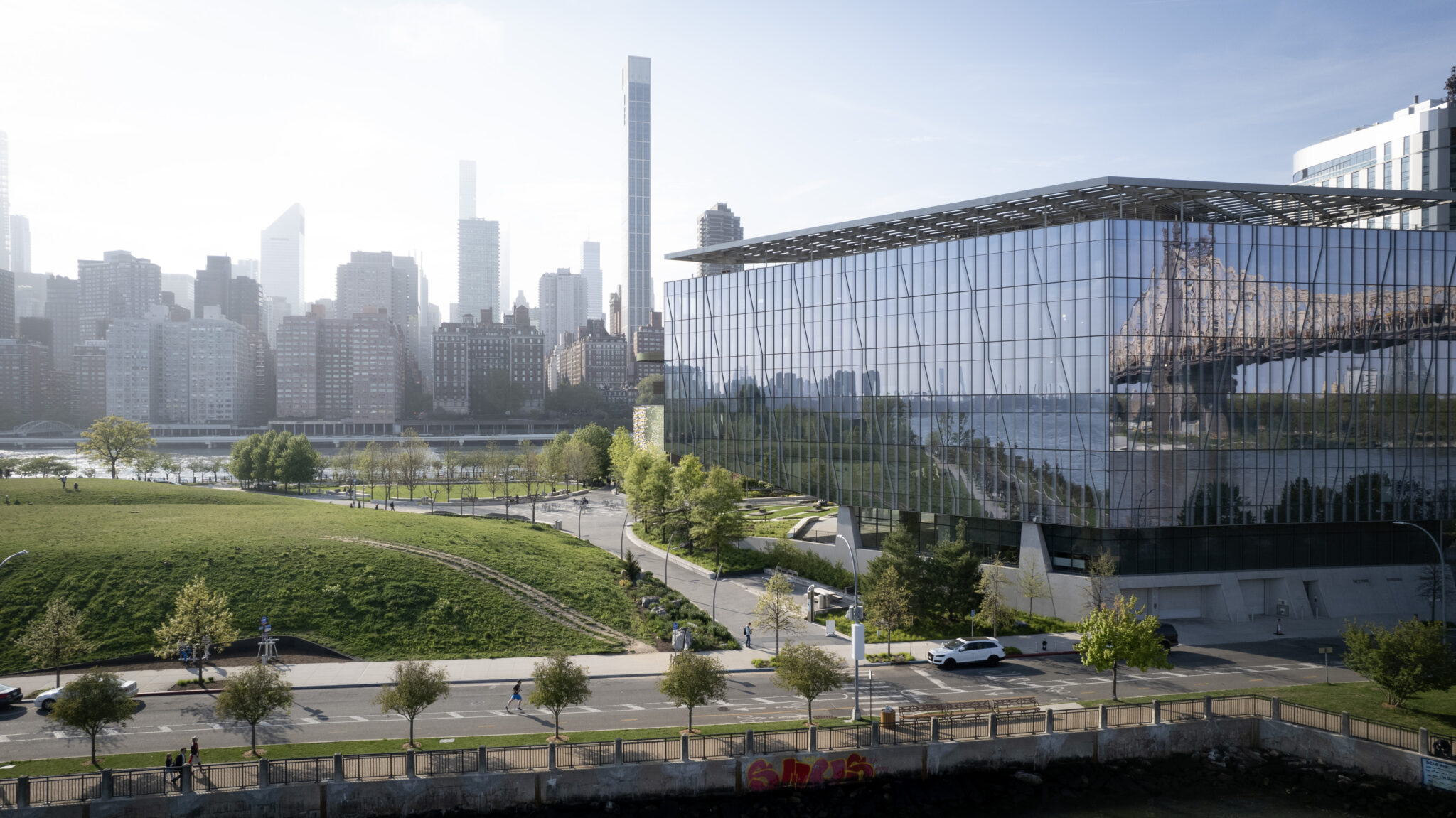
In Cornell Tech’s Future Builders Studio, students gain a hands-on introduction to innovation, entrepreneurship, and emerging technologies — guided by faculty and mentors from one of the world’s top tech universities. Over three weeks, students will learn to identify real-world problems, design user-centered solutions, and integrate artificial intelligence throughout the process — from research and ideation to prototyping and storytelling. The program culminates in a showcase on Cornell Tech’s Roosevelt Island campus, where students present their AI-powered projects and walk away with college-ready experience, teamwork skills, and the confidence to lead in a tech-driven world.
Frequently Asked Questions
Program Structure
Does this program award college credits?
Yes. Students who successfully complete the program will receive a transcript reflecting that they have earned two Cornell University credits.
Is this a commuter or residential program?
Summer Innovation Intensives is a commuter program. No housing is provided.
Where is the program located?
At Cornell Tech – Roosevelt Island campus
2 West Loop Road
New York, NY 10044
What is the duration of the program?
The program runs for 12 full days, Monday–Thursday, July 13–30, 2026, from 9:00 a.m.–5:00 p.m.
The first (July 13) and last (July 30) days will include extended hours for orientation and closing activities.
When will applications be accepted?
Beginning in February 2026 and continuing on a rolling basis.
Applicant Eligibility
What are the basic eligibility requirements?
Applicants must:
- Be 15–19 years old and have completed their sophomore year of high school by the program start date.
- Reside in the NYC Metropolitan Area for commuting (see below for students outside the area).
- Demonstrate academic readiness and personal maturity.
- Students taking the Engineering Operations morning class must have completed precalculus before the program begins
Can high school freshmen or sophomores attend?
Only students who are at least 15 years old and have completed their sophomore year of high school by the program start date may attend.
Can high school graduates attend?
Yes, graduates who are 18 or 19 years old by the program start date are eligible.
Can incoming Cornell undergraduates apply?
Yes. Incoming Cornell undergraduates may participate but will be subject to all Cornell student policies and codes of conduct, which may differ from those for high school students.
Can students from outside the NYC Metropolitan Area attend?
Yes, with conditions:
For 15-, 16- or 17-year-olds:
Students may attend if their parent(s)/guardian(s) attest that temporary housing and a supervising adult will be arranged for all times the student is not on campus.
For 18- or 19-year-olds:
Students may attend and manage their own housing arrangements.
Can international students apply?
Not at this time. The program currently admits students who are U.S. citizens and permanent residents only.
Are interviews or a specific GPA required?
No interviews or minimum GPA are required. Applicants are reviewed holistically.
In general, students with a B+ average or higher tend to be well-prepared for college-level work.
How many students will be accepted?
The program is selective, and applications will be reviewed on a rolling basis.
Costs Associated with Attending
Is there a cost to apply?
Yes. The application fee is $45.
What is the cost of the program?
Participants who make their $500 non-refundable deposit by April 30, 2026, will benefit from a discounted program tuition and fees of $5,500.
Starting May 1, 2026, program tuition and fees will total $6,500.
Is a deposit required after admission?
Yes. A non-refundable $500 deposit is due to secure a spot.
Are fee waivers, financial aid, or scholarships available?
Not at this time.
Logistics and Amenities
What are the commuting options to Roosevelt Island?
The Cornell Tech campus is accessible via multiple public transit options.
Is there a cafeteria on campus?
Yes. Students will have lunch at The Café at Cornell Tech.
Do students have access to sporting facilities?
Cornell Tech does not have on-campus athletic facilities, though Roosevelt Island offers many open outdoor spaces, and the local Sportspark complex is also an option for island residents and non-residents.
Application Materials
What materials must applicants submit?
- School transcript:
Official transcripts will be required for all previous and current high school years.
Understanding that official transcripts are not always readily available, unofficial transcripts and report cards will be accepted during the application process with the condition that, if the applicant is accepted, official transcripts will be received before the start of the program. - Two letters of recommendation:
From any combination of the following: principal, teacher, academic advisor, school counselor.
The recommendation letters must speak to the student’s academic performance, leadership skills, teamwork skills, behavioral maturity, any other commendable qualities the recommender would like to add. - Essay:
Length: 250-300 words per prompt
Make it personal and be sure that your answers provide concrete and specific examples from your experiences, interests, and aspirations.
Use the prompts below as a guide:- Why do you want to participate in the Summer Innovation Intensives at Cornell Tech and what do you hope to learn?
- What are the main contributions you can make to the program and your Future Builder Studio team?
- Resume:
Academic projects of relevance
Other student development activities
Ready to Apply?