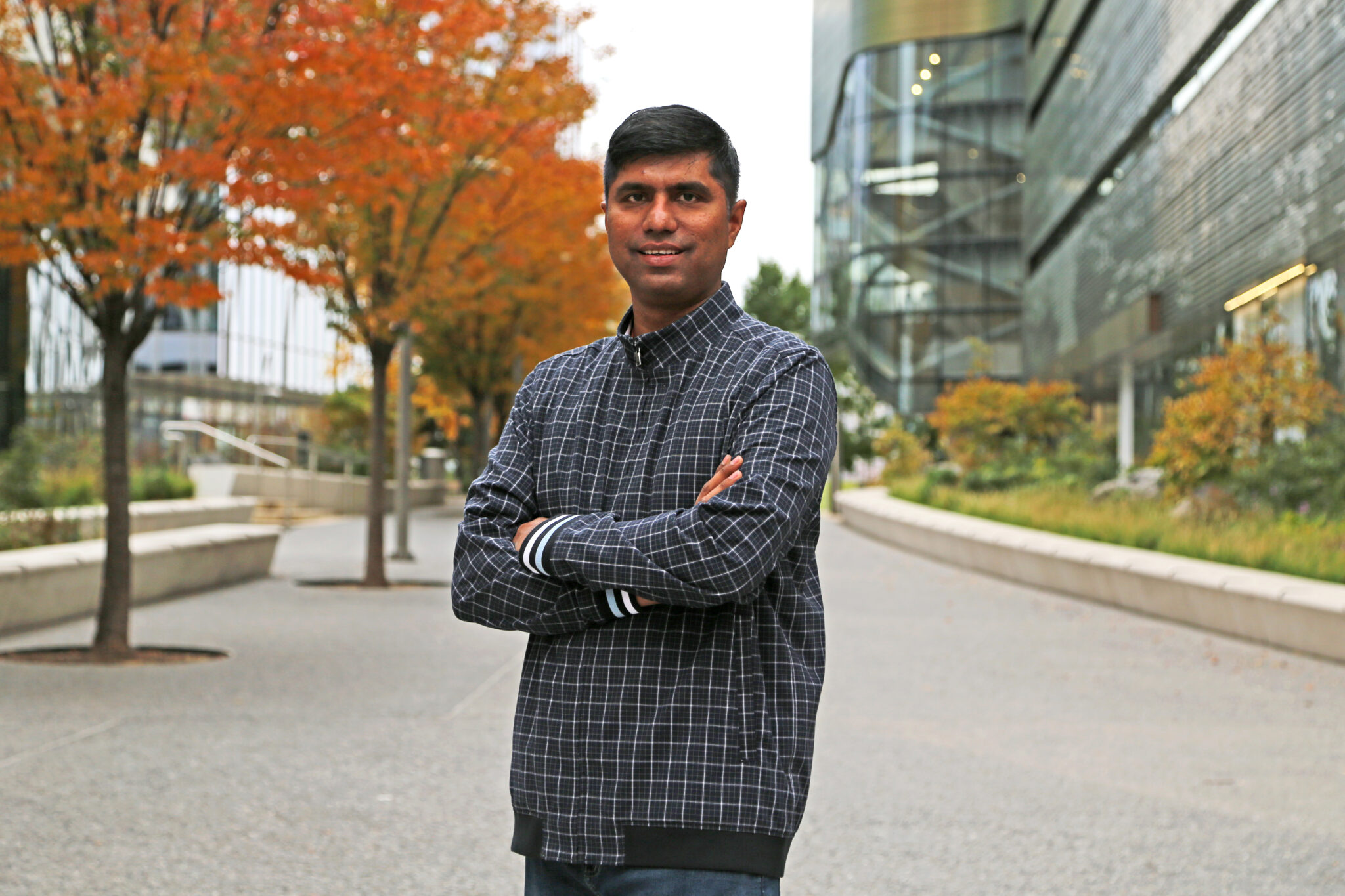
Inside Studio: A Conversation with Josh Hartmann
Categories

By Grace Stanley
At the heart of Cornell Tech’s hands-on, interdisciplinary approach is Studio — a signature program of the Jacobs Technion-Cornell Institute that brings students together across disciplines to build, test, and launch real-world solutions.
We sat down with Josh Hartmann, Chief Practice Officer and leader of Studio since 2018, to talk about what makes the program unique, how it’s evolved, and why it’s a powerful engine for innovation in New York City.
Studio is a requirement at Cornell Tech. Why is that?
Hartmann: There are a few big reasons. First, when we created Cornell Tech, we knew we’d have multiple degree programs, now ten in total. Rather than having ten separate silos, we wanted a signature element that would bring everyone together. Studio is that element. It creates a single, cohesive population across the campus.
Second, we believe entrepreneurship is vital — not just for startups, but for anyone creating something new. Whether you’re launching a company or innovating inside a large organization, the skills we teach in Studio (opportunity identification, de-risking, iteration) are relevant.
We also offer different pathways. Students can choose to pursue a BigCo Studio track, which focuses on innovation within large companies, or PiTech Studio, which explores how to develop and deploy technologies in the public interest.
What does a typical day in Studio look like for a student?
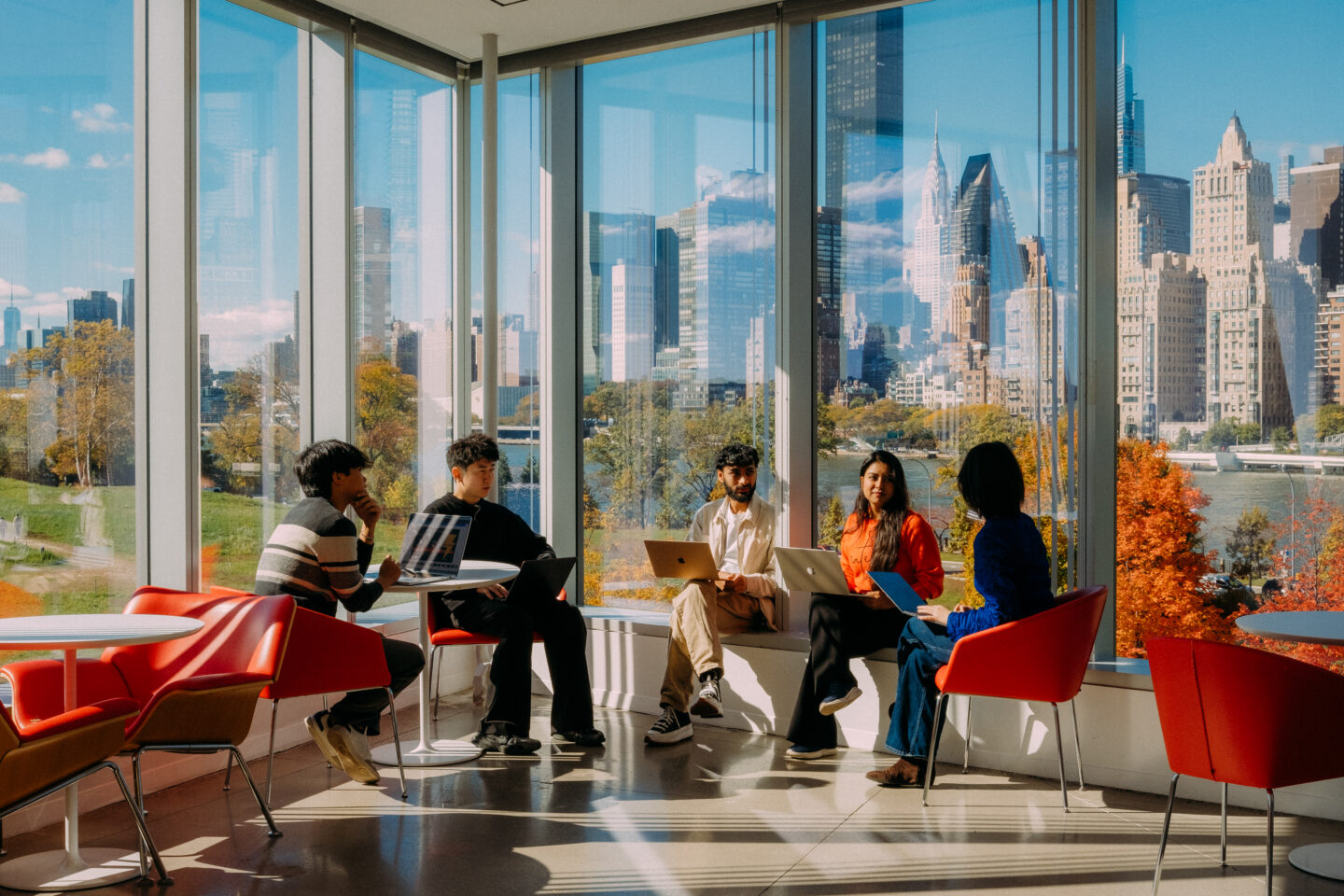
There’s no such thing as a typical day, and that’s by design. You’re rarely sitting and listening to someone talk at you. Instead, you’re out in the world: talking to users, building prototypes, testing ideas, and learning through doing.
We structure Studio across the full academic year. For most students, that’s their entire time at Cornell Tech. Classes are held on Tuesday and Thursday afternoons, and we also set aside a few Fridays each semester for “Studio Maker Days” — uninterrupted time for teams to build, present, and iterate.
How has Studio evolved since you joined Cornell Tech?
It has more than doubled in size, which has been exciting and challenging. One thing we’ve focused on as we’ve grown is feedback. We make sure every team gets as much feedback as they can handle, from as many perspectives as possible. That includes contradictory feedback, which is a real-world challenge entrepreneurs face all the time.
Another big shift is the rise of AI. When we started a decade ago, AI wasn’t mainstream. Now, it’s transforming product development. As they would in industry, students are using AI to accelerate all facets of product development, from research, to ideation, to rapid prototyping through “vibe coding,” and we’re adapting our curriculum to reflect that.
How does Studio impact the New York City economy?
In a lot of ways. First, we invest in up to four of the top startups each year from our master’s cohort. These teams are committed to staying in New York and building their companies here. That’s a direct pipeline of innovation into the city’s economy.
Second, we’re creating a workforce that’s fluent in applying AI and other emerging technologies. And third, we engage with hundreds of industry advisors each year — people from companies across NYC who work directly with our students to provide feedback and context.
New York is no longer an outlier for startups. It’s a media hub, a financial hub, a growing health tech hub, and home to major players like Google, Meta, Microsoft, and Amazon. It’s a great place to start and grow a company.
What excites you most about the future of Studio?
Cornell Tech has just added new degree programs in design and data science, which brings even more diversity to our teams. That diversity leads to more creative solutions, and we learn more from our students every year.
As AI continues to evolve, we’re evolving too. We’re advancing the curriculum so our students are ready from day one to make an impact in their organizations and become the next generation of tech leaders.
Grace Stanley is the staff writer-editor for Cornell Tech.