

CS Classroom
Pedagogical Lenses provide coaches with overall frameworks through which to view teachers’ Classroom Practices and CS lesson facilitations. They can also be shared with teachers so they may reflect on their own teaching practice to inspire or informa areas for further development or growth.
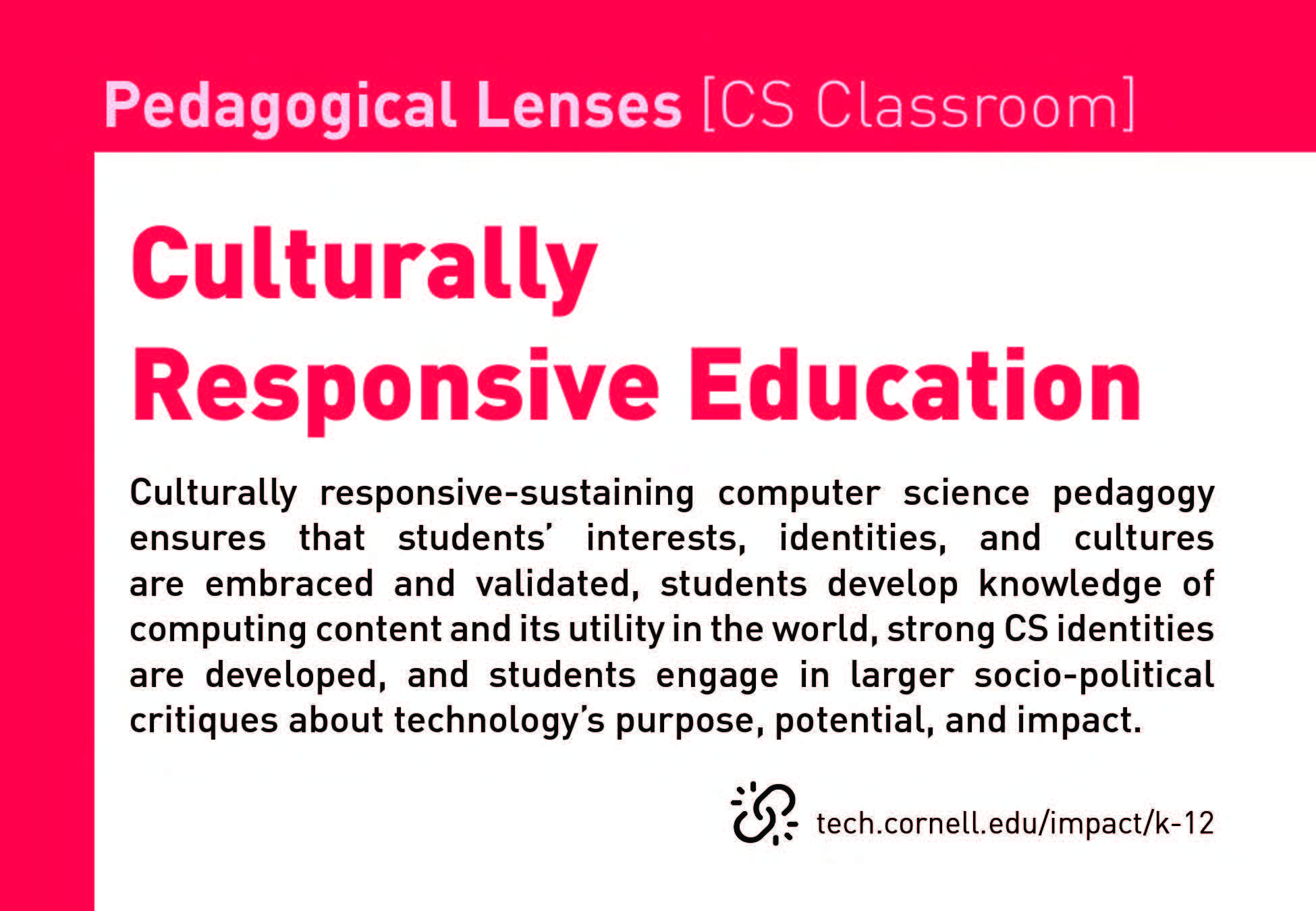
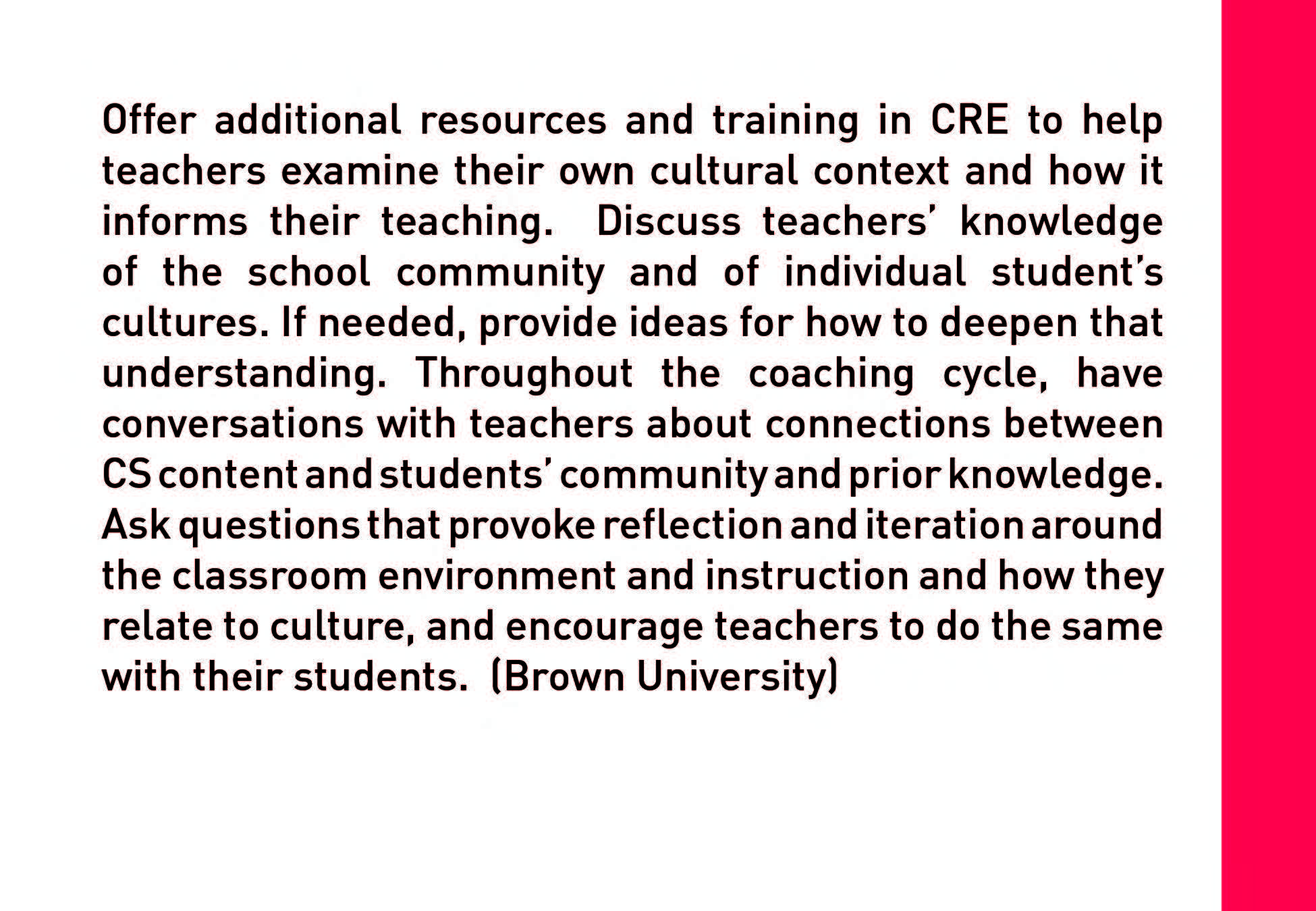
Culturally Responsive Education
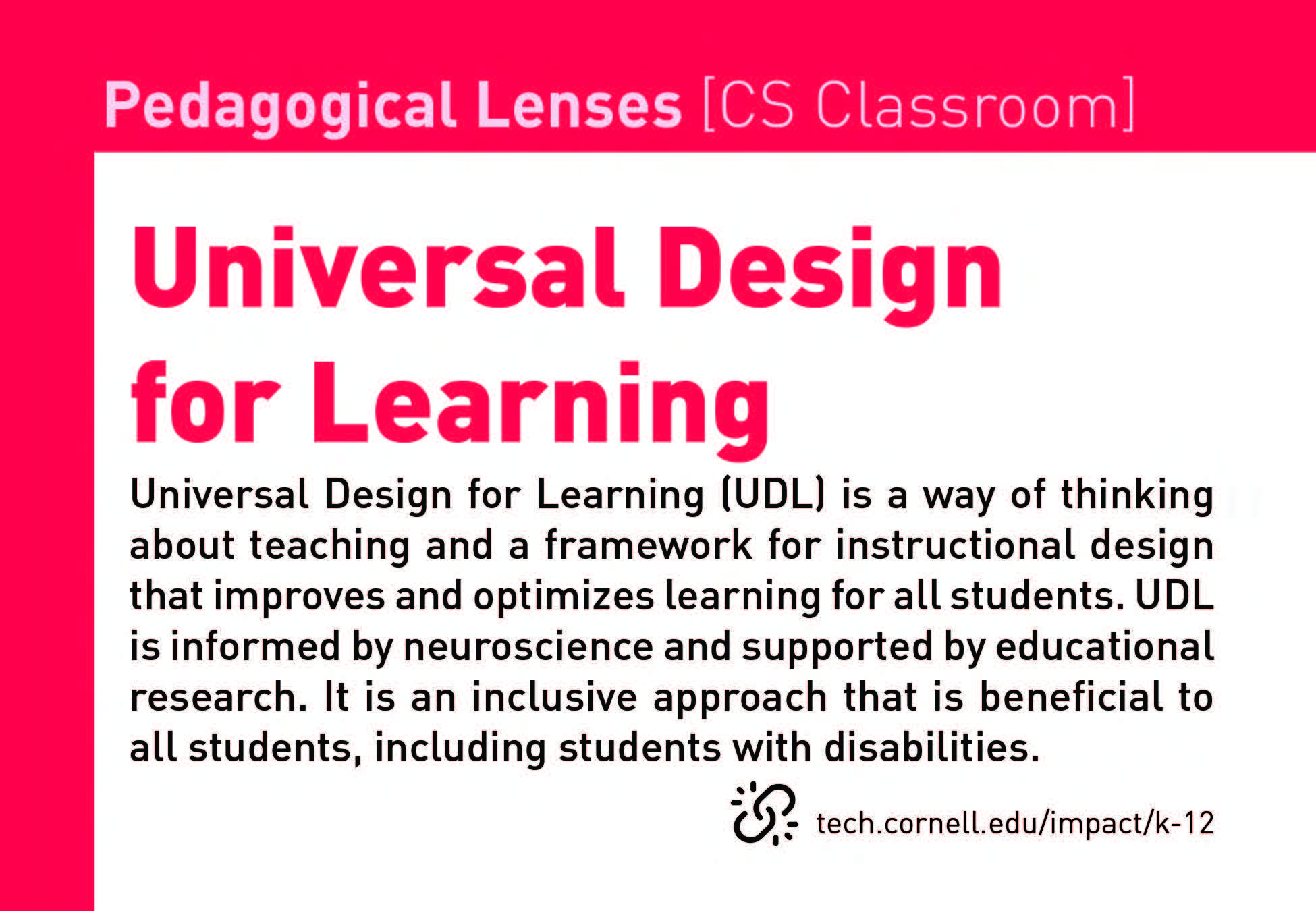
Universal Design for Learning
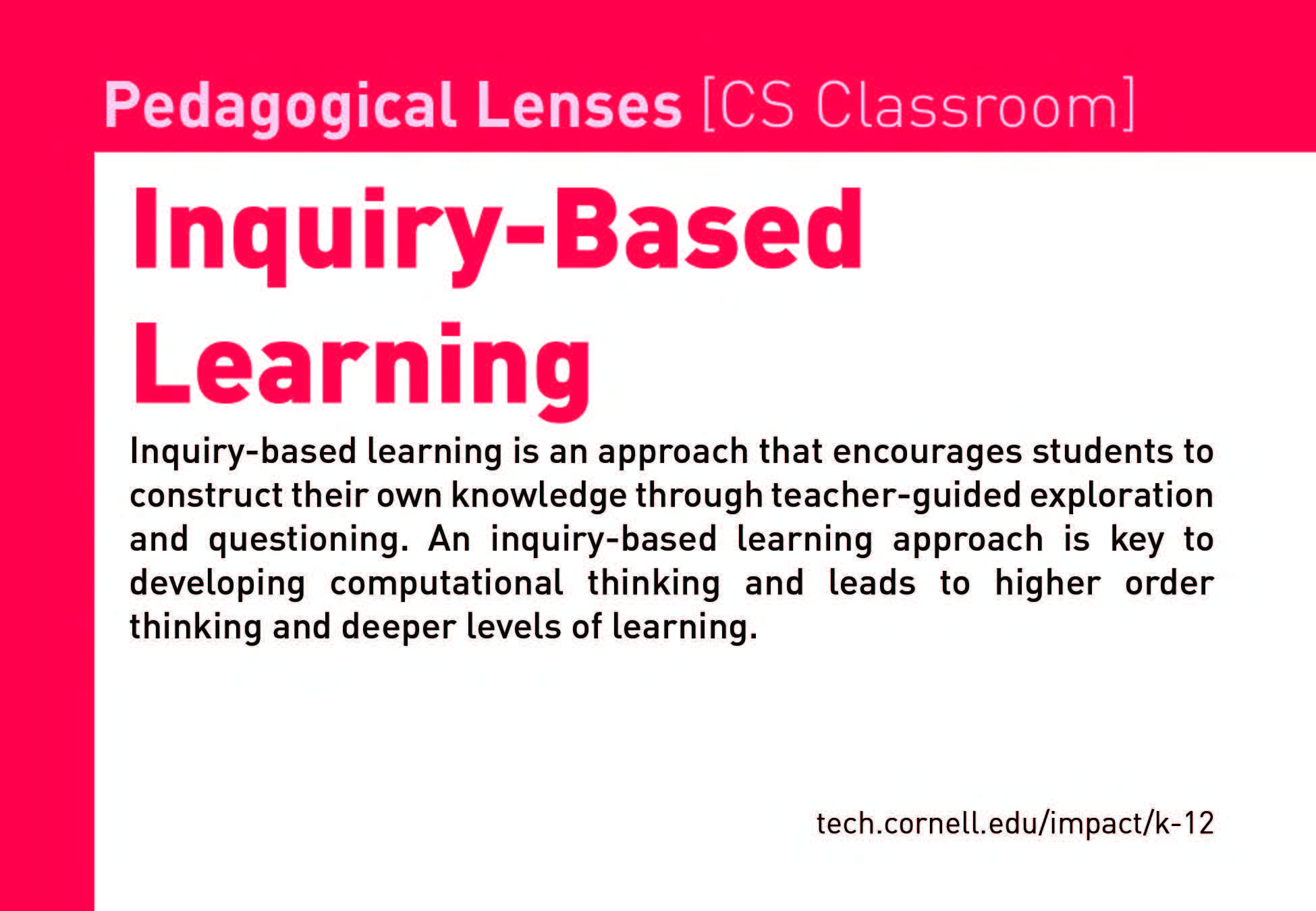
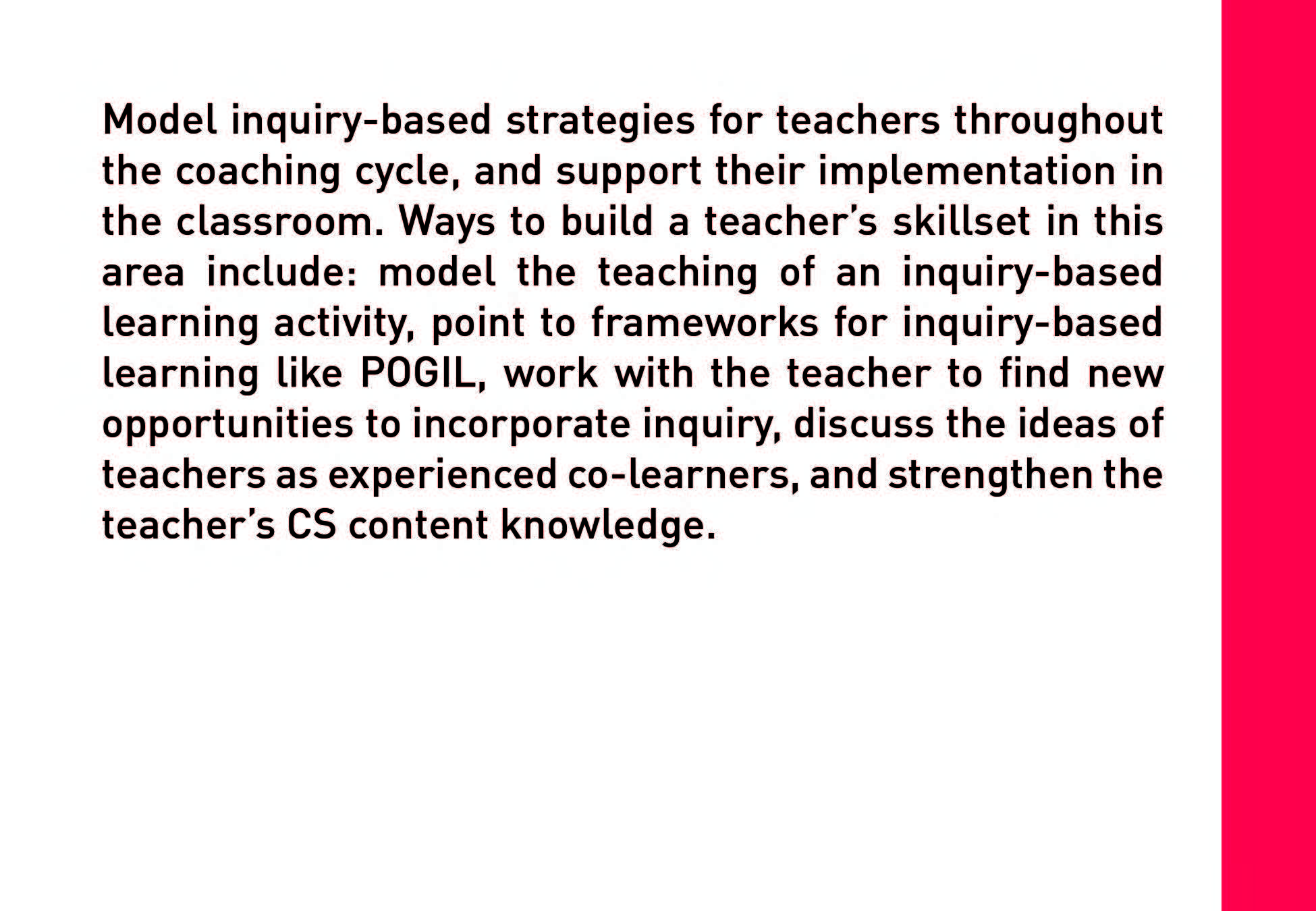
Inquiry-Based Learning
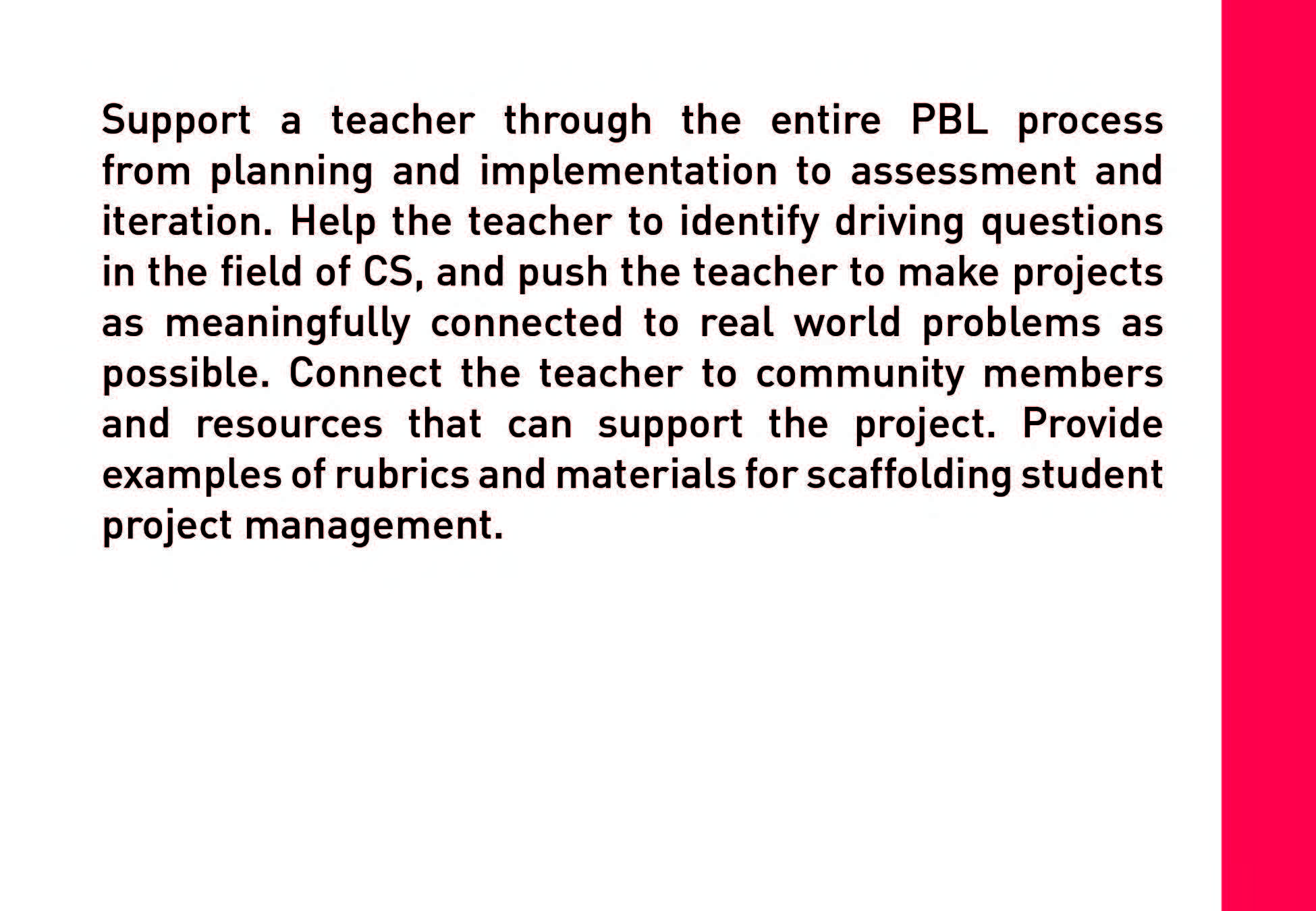
Project-Based Learning
Computational Thinking
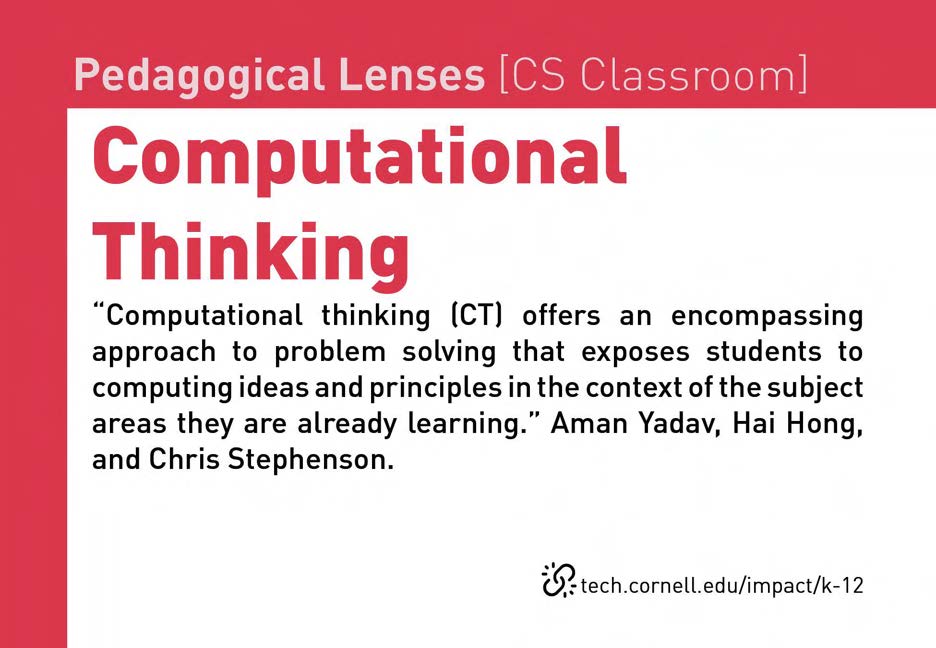
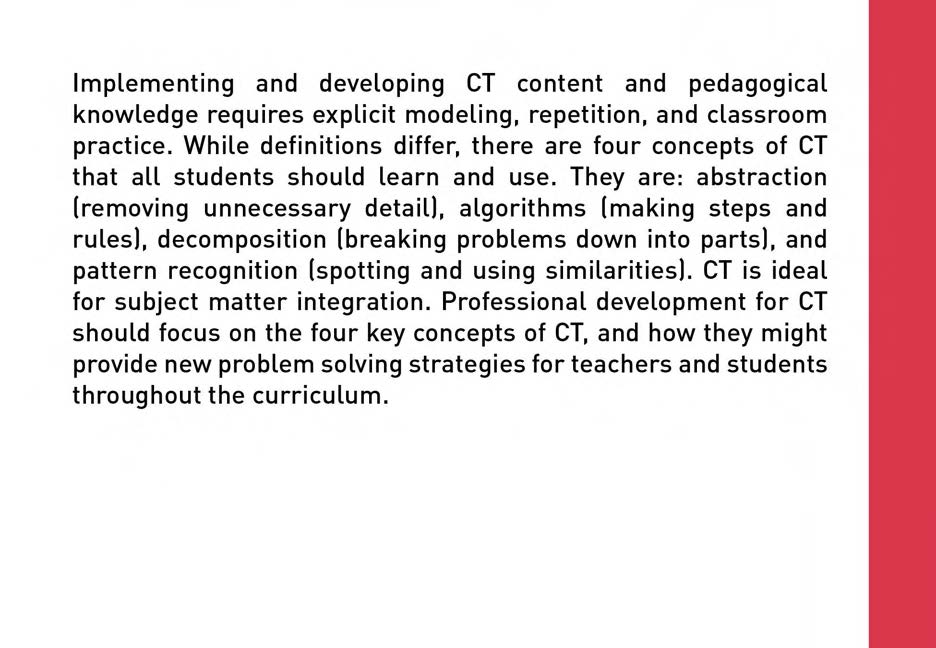
- Yadav, A., Hong, H. & Stephenson, C. Computational Thinking for All: Pedagogical Approaches to Embedding 21st Century Problem Solving in K-12 Classrooms. TechTrends 60, 565–568 (2016). https://doi.org/10.1007/s11528-016-0087-7
- For elementary teacher preparation, Computing At Schools, Barefoot Computing CT framework used in the UK , focuses on 6 concepts and 5 approaches to problem solving. Examples of how to develop CT concepts and approaches are available on the CAS website. https://www.barefootcomputing.org/concept-approaches/computational-thinking-concepts-and-approaches . Barefoot’s CT framework is illustrated on this poster.
- In addition, CSTA and ISTE have published an operational definition of CT that includes a set of core skills and dispositions/approaches. Examples of how to implement CT across the curriculum are provided. https://www.iste.org/explore/computational-thinking/computational-thinking-all
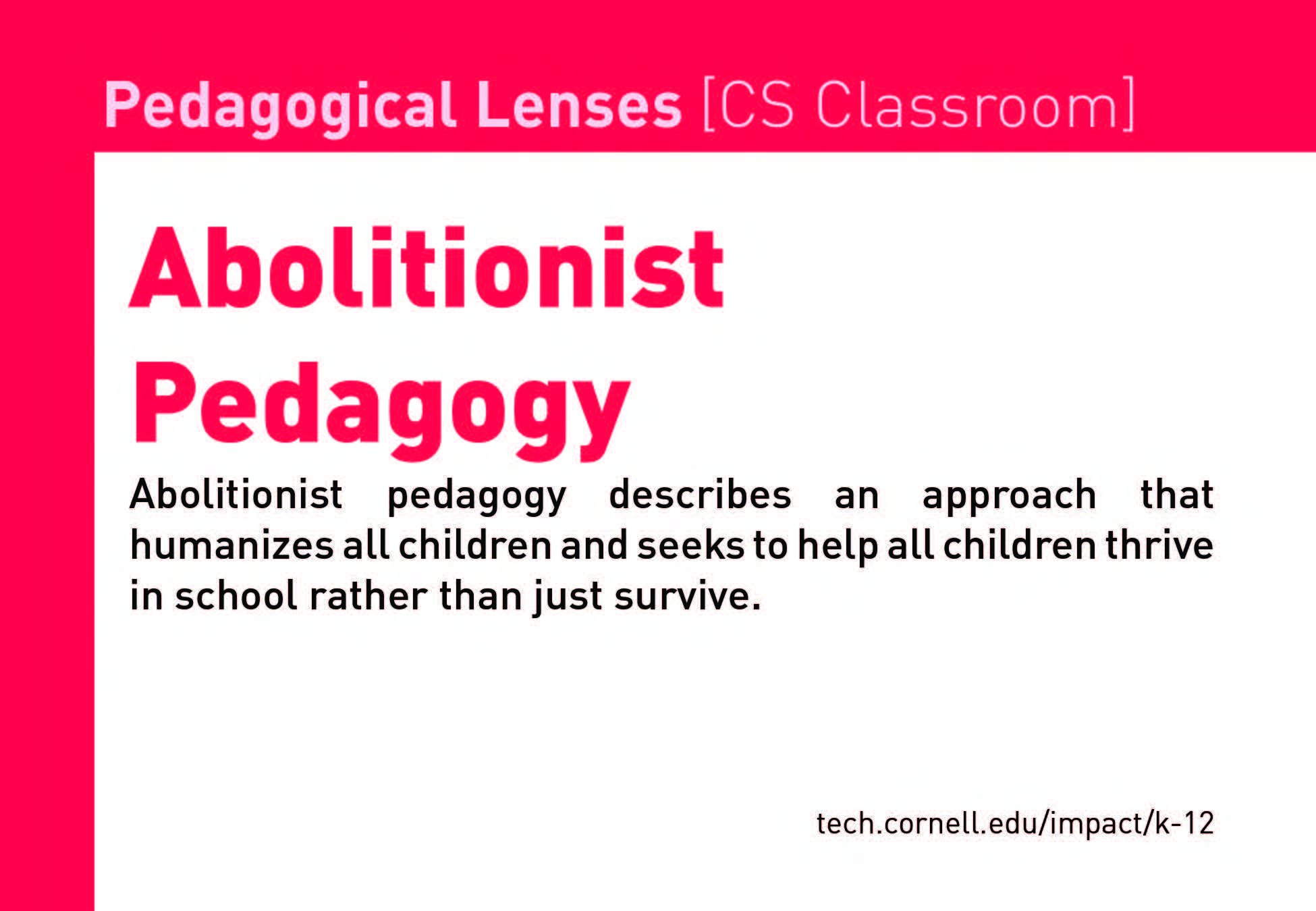
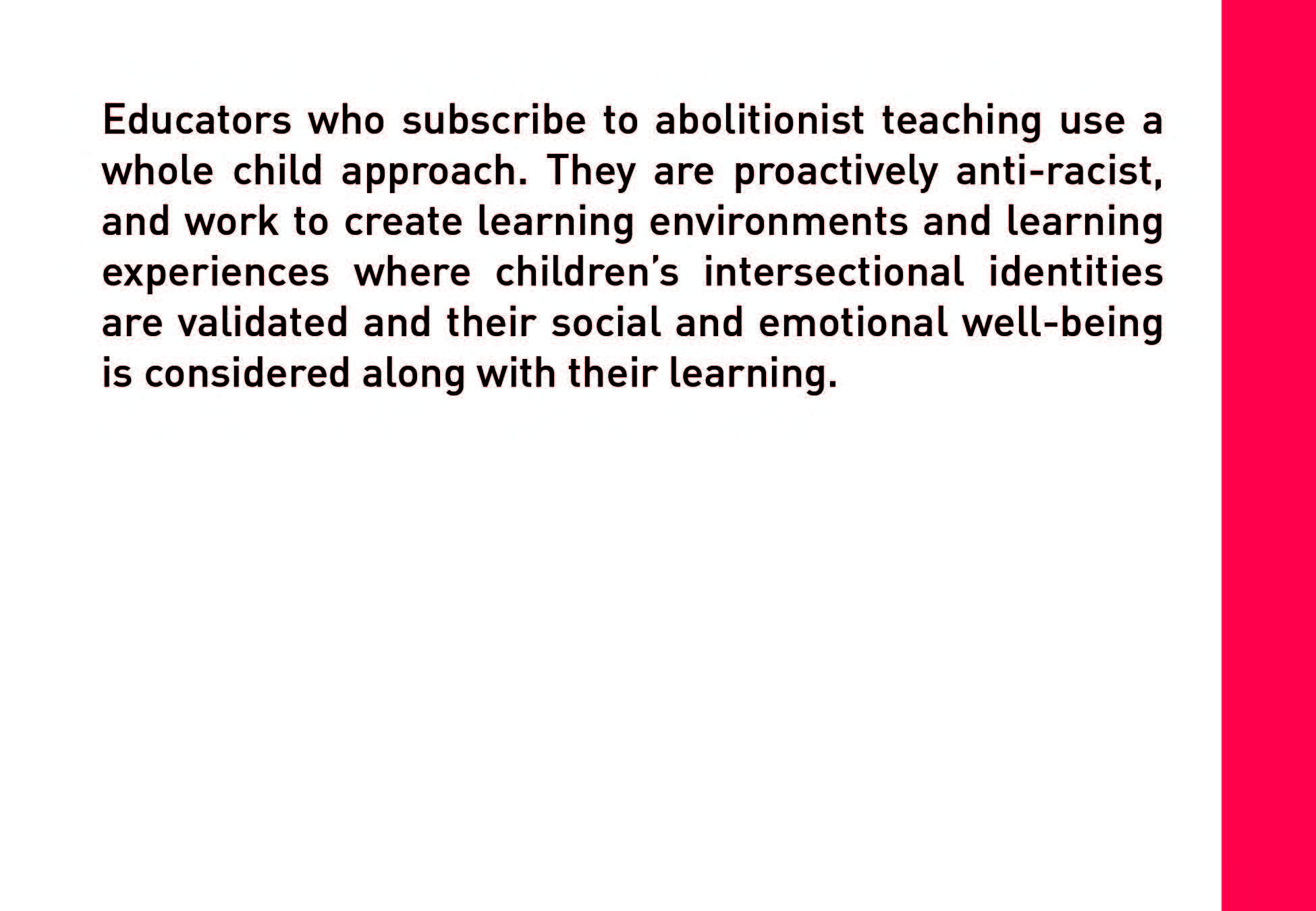
Abolitionist Pedagogy
Classroom Practices are a collection of strategies, best practices, and moves that offer teachers concrete detailed approaches that they may use when directly facilitating and instructing students in a CS lesson.
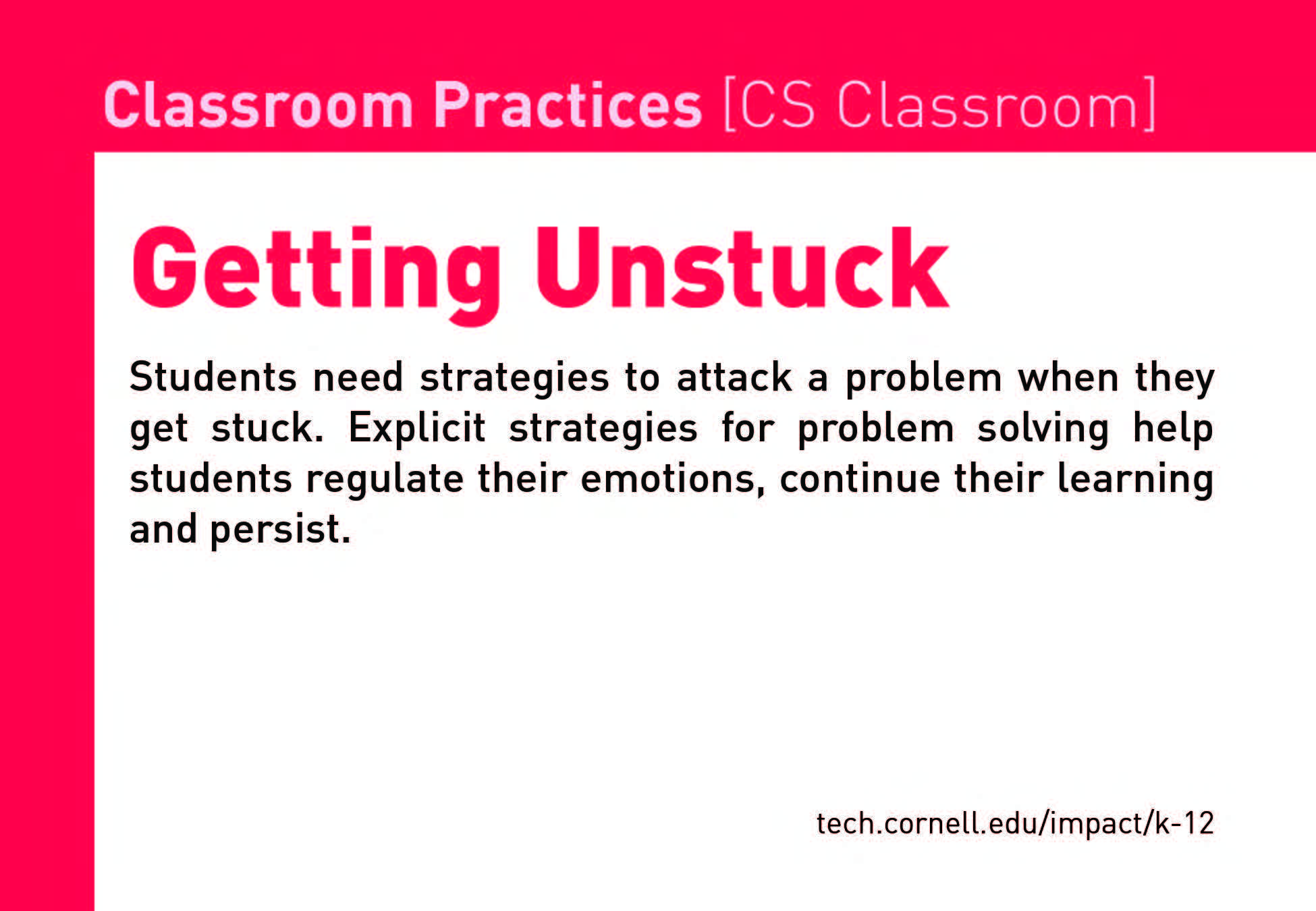
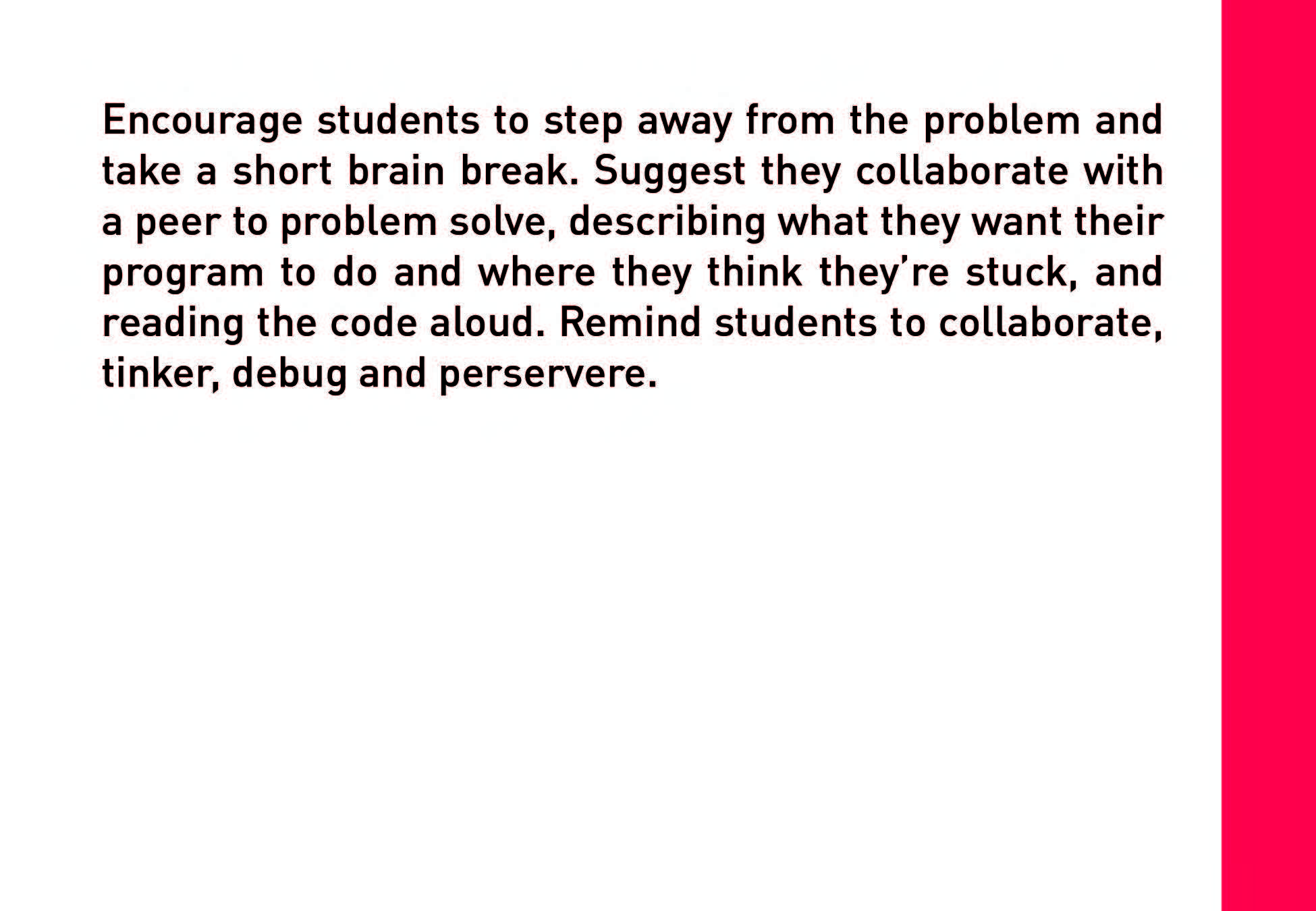
Getting Unstuck
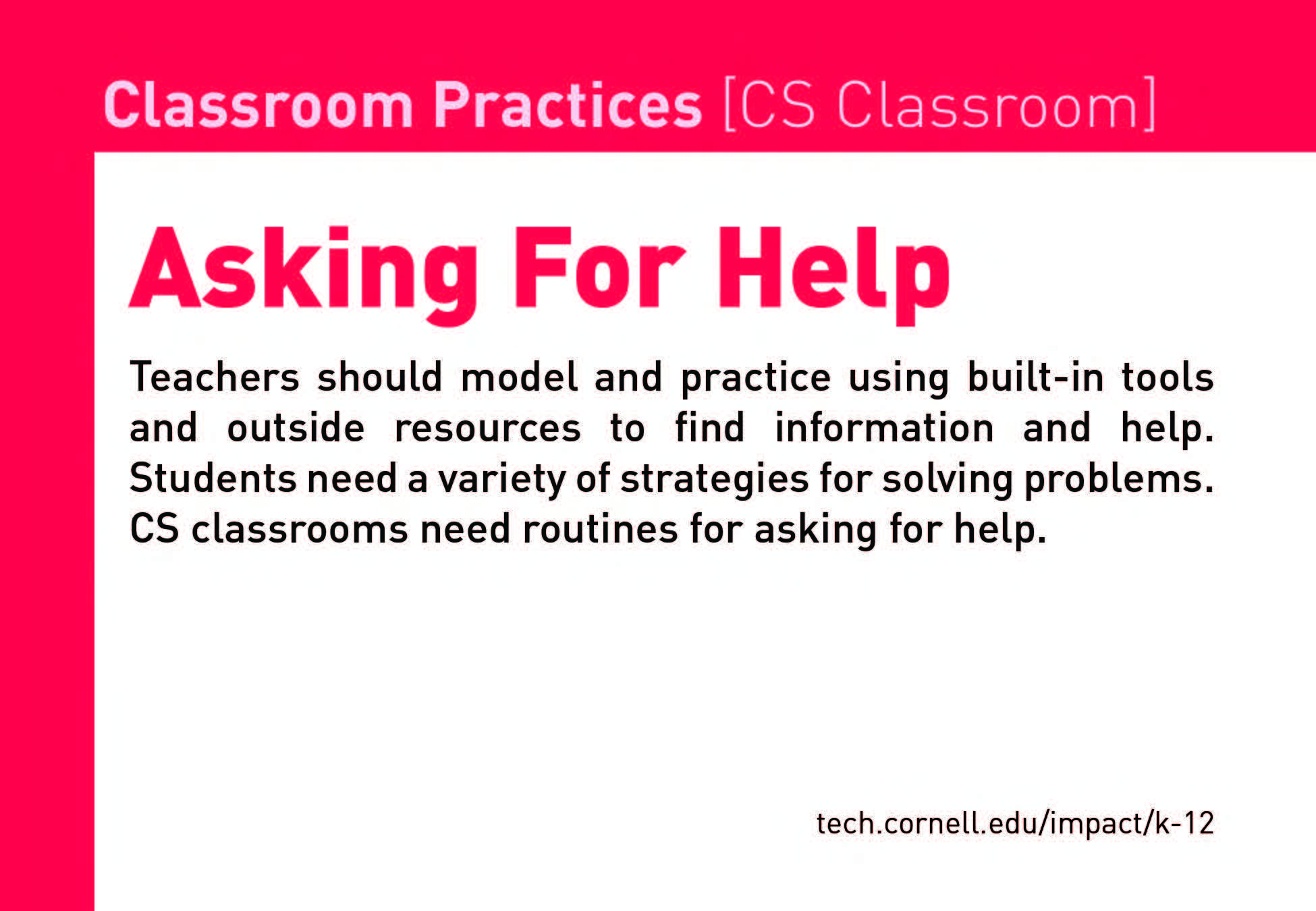
Asking for Help
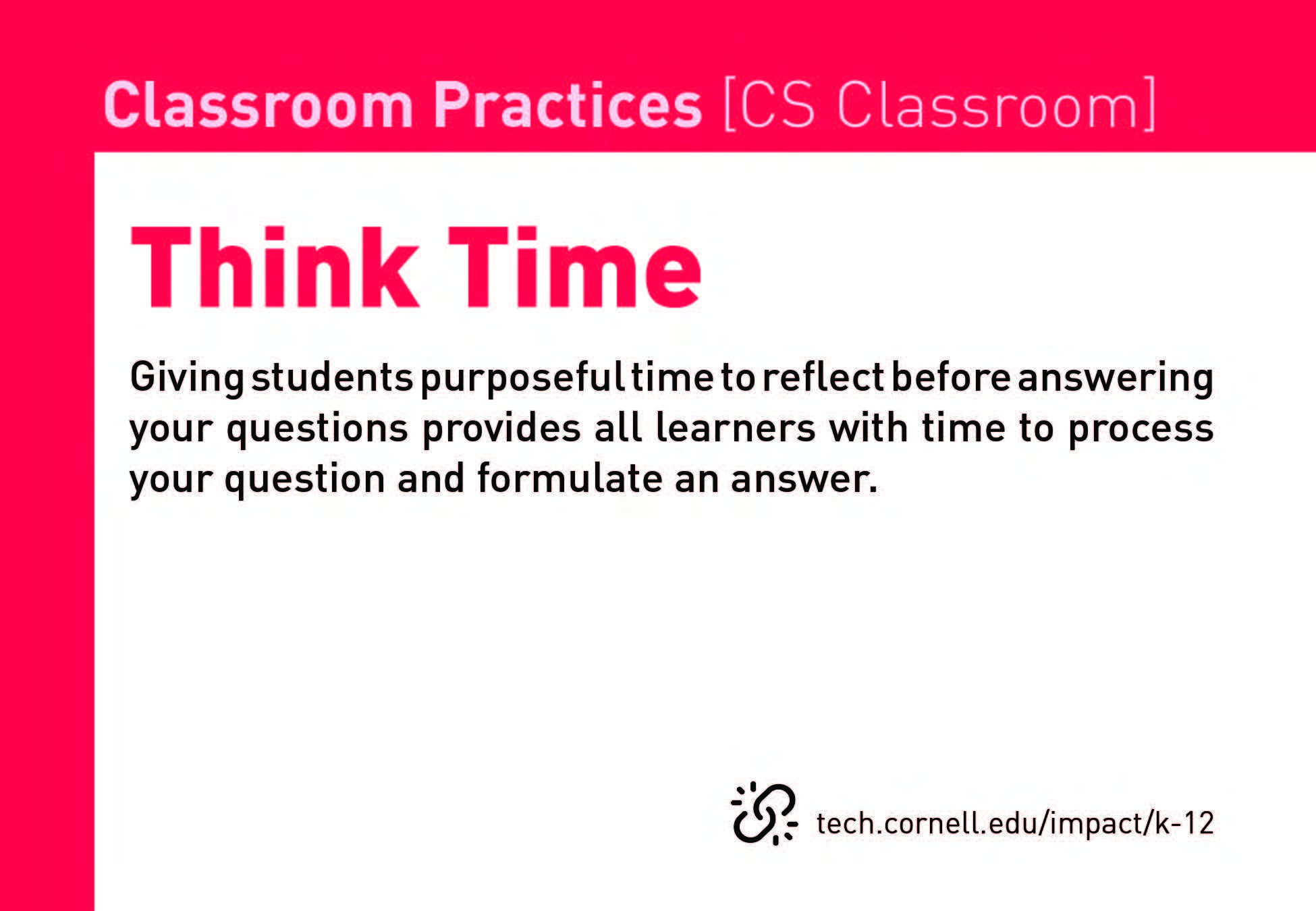
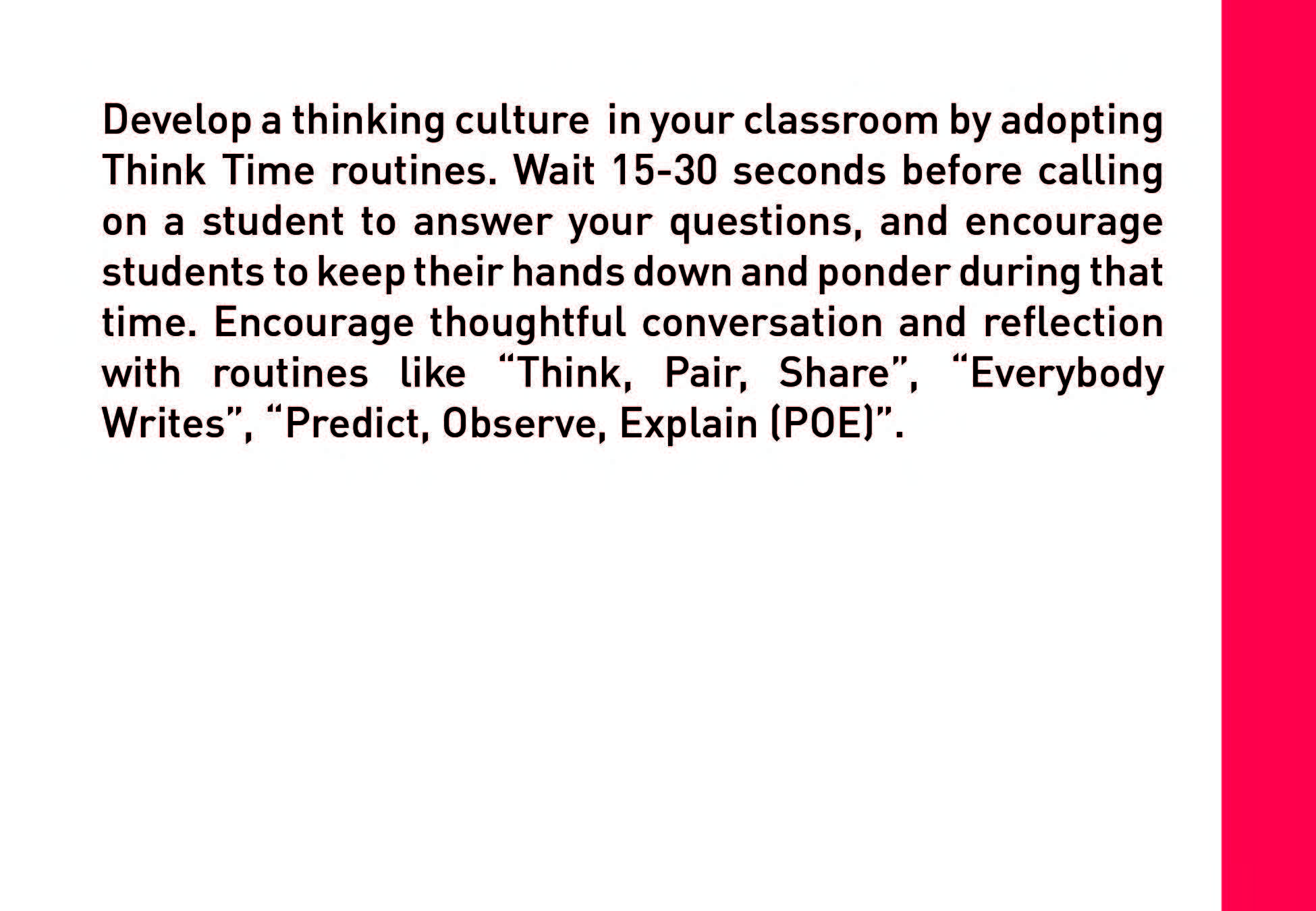
Think Time
The Power of Paraphrasing
The Hook
Student Deliverables
Pseudocode
Worked Examples
Commenting
Lingering Questions
Least to Most Prompting
Facilitating Student Talk
Capturing Students' Thoughts
Heads Up
Hands Behind Back
That Could Be Me
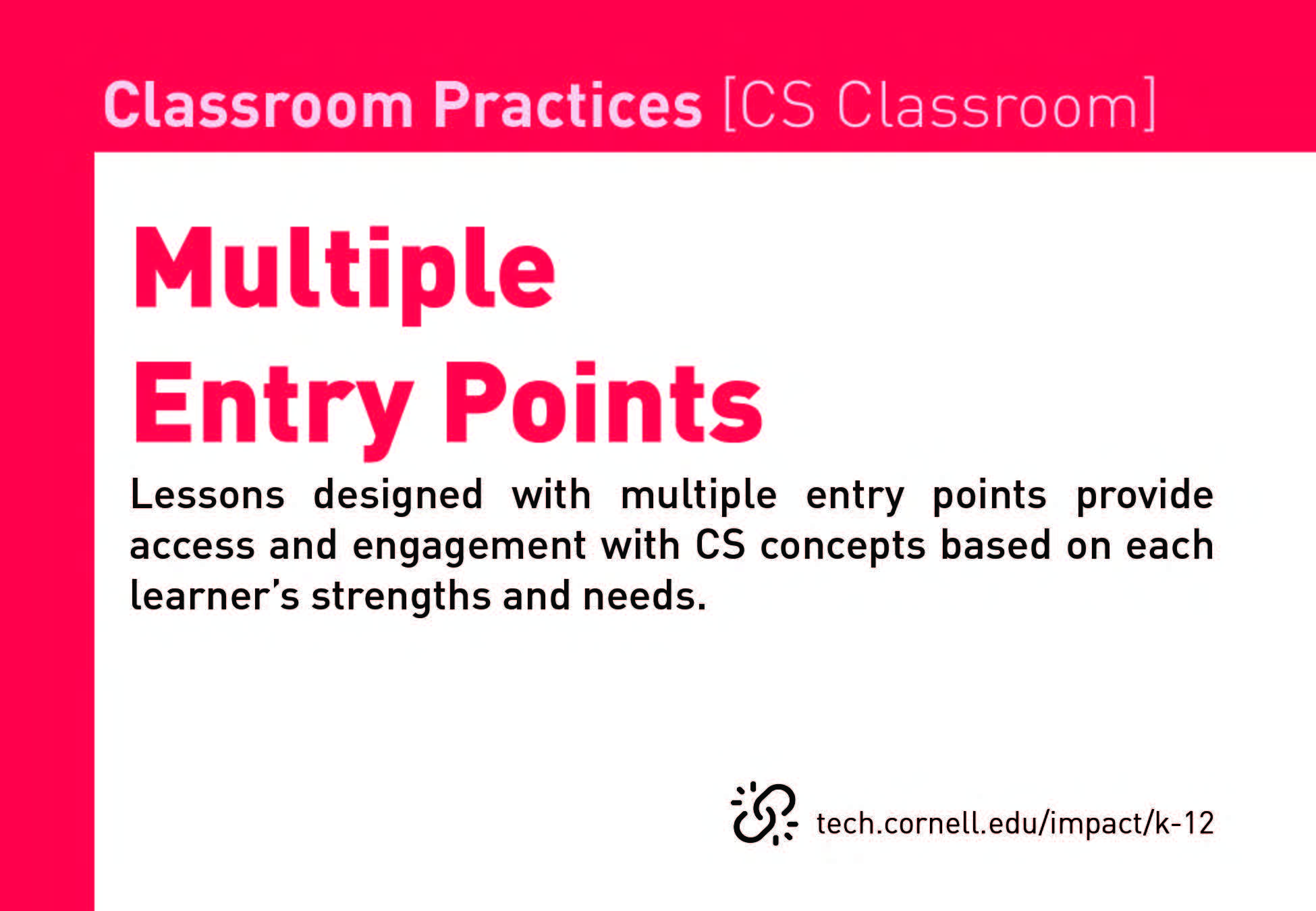
Multiple Entry Points
Create CT Cues

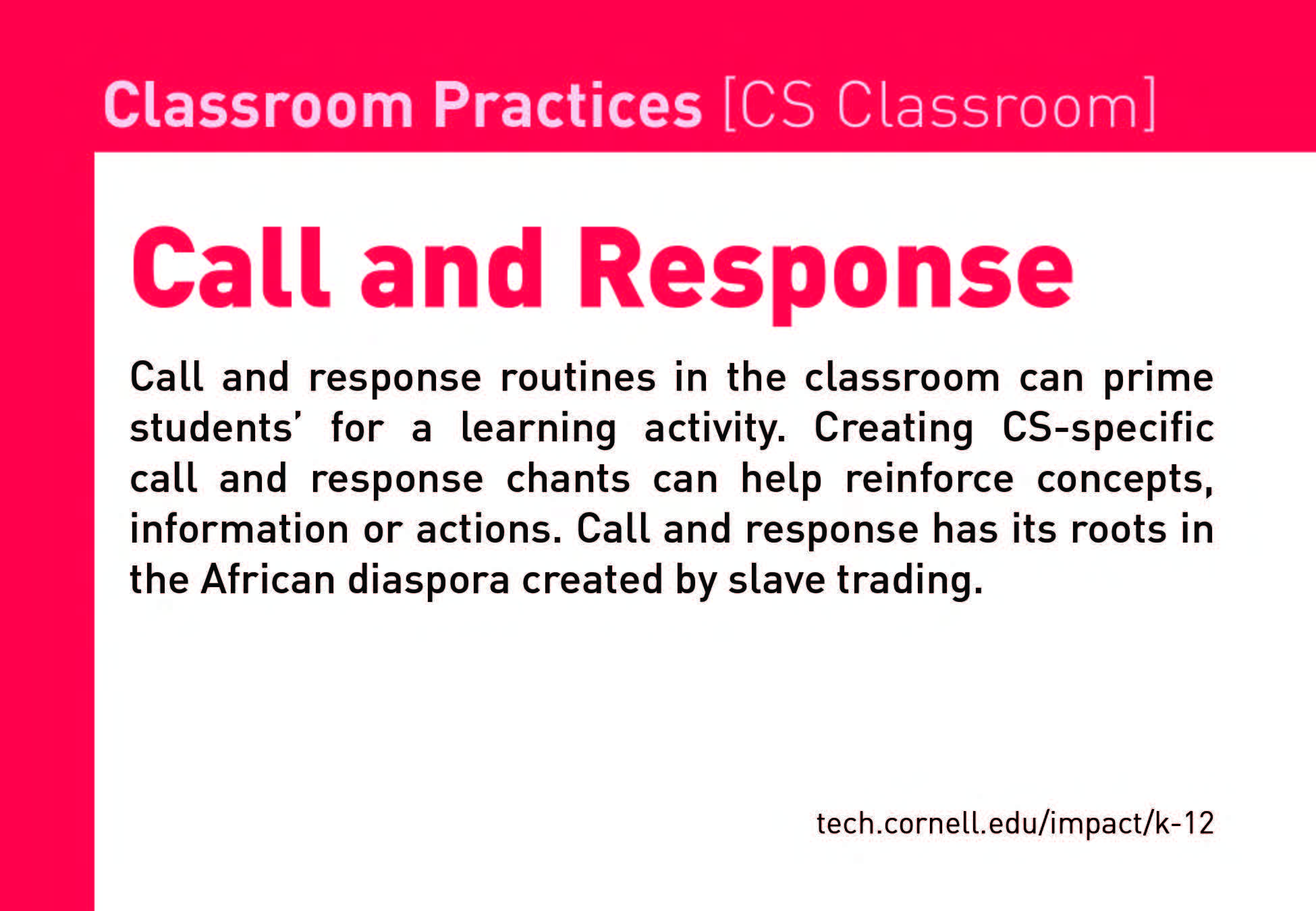
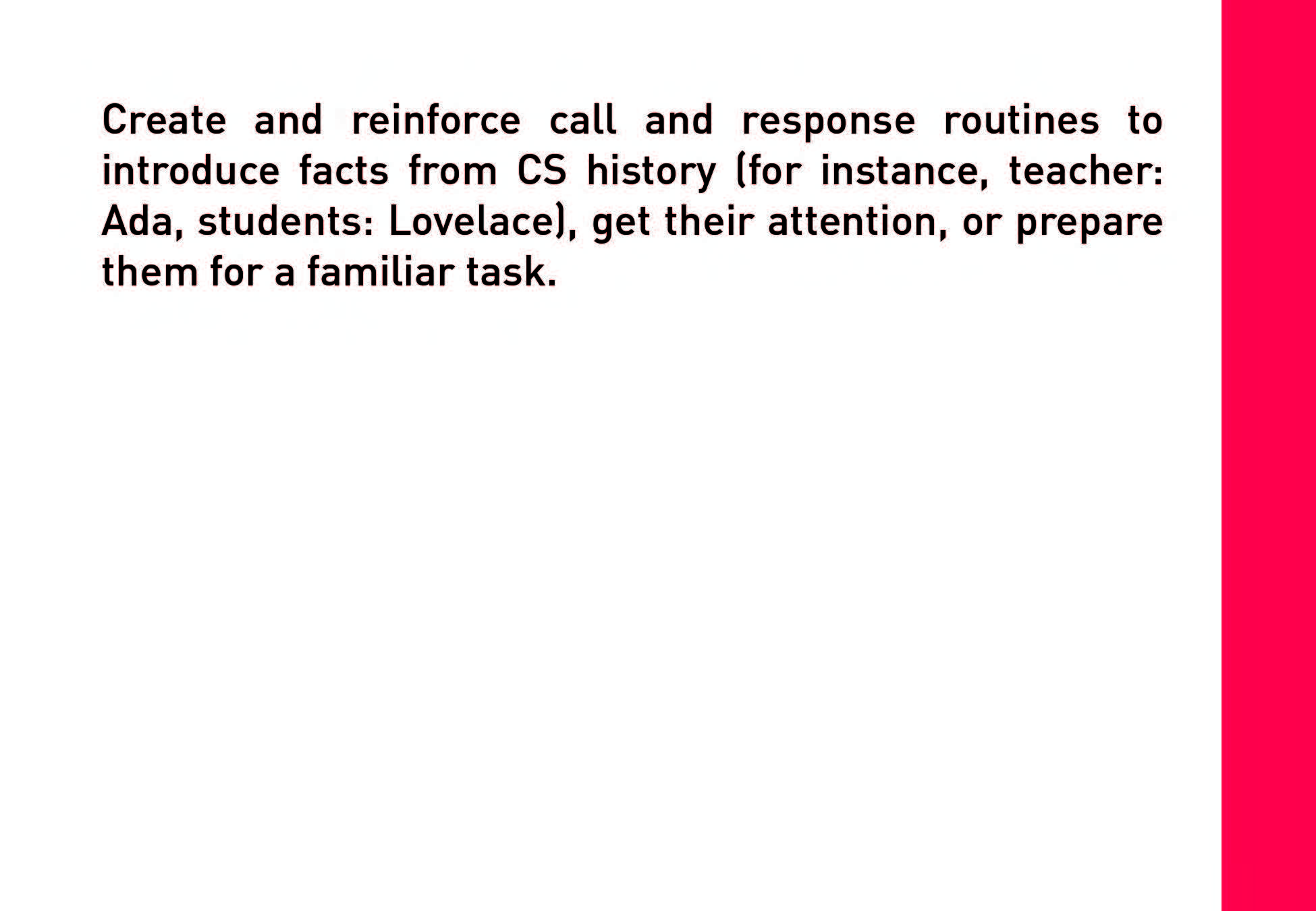
Call and Response
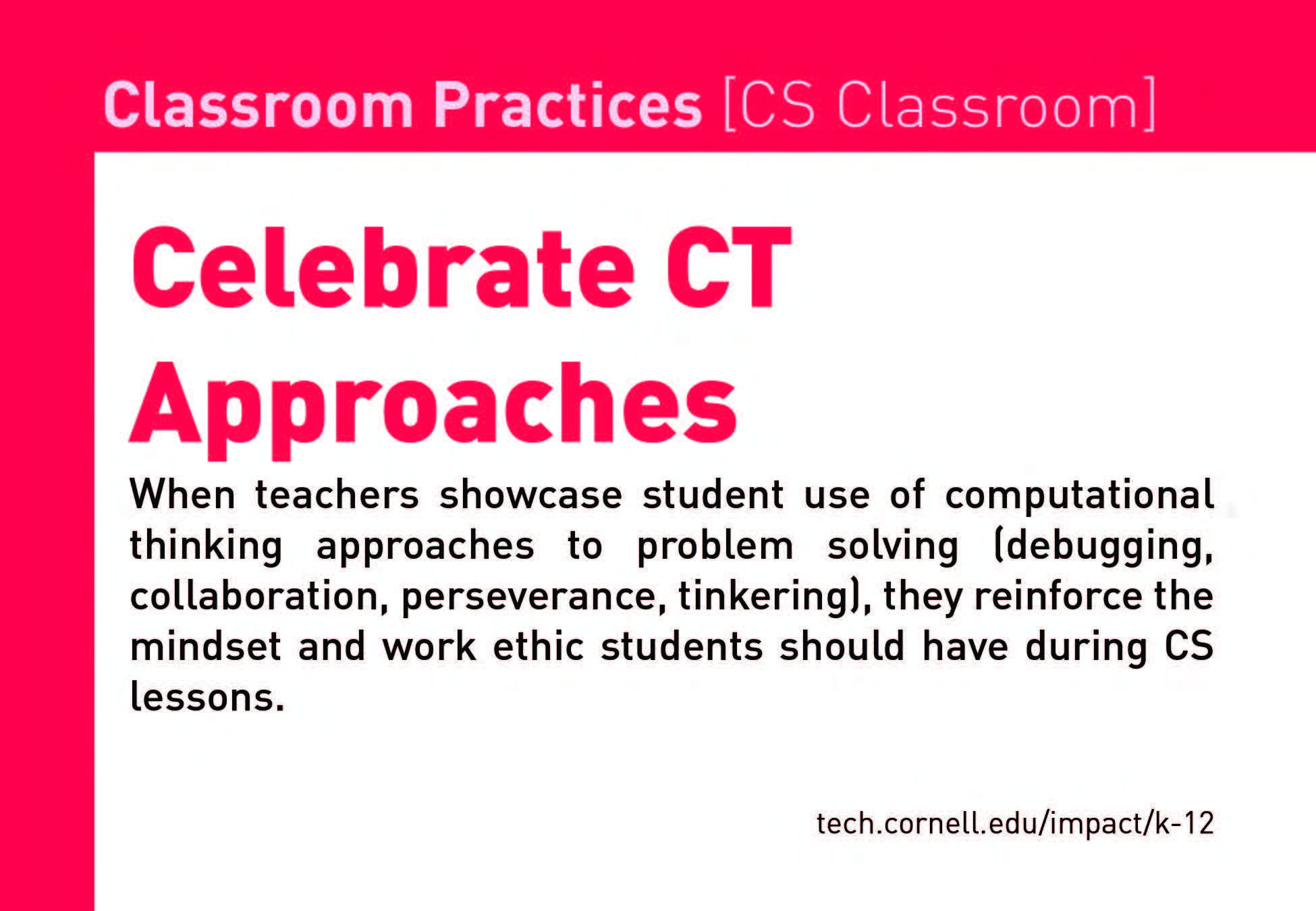
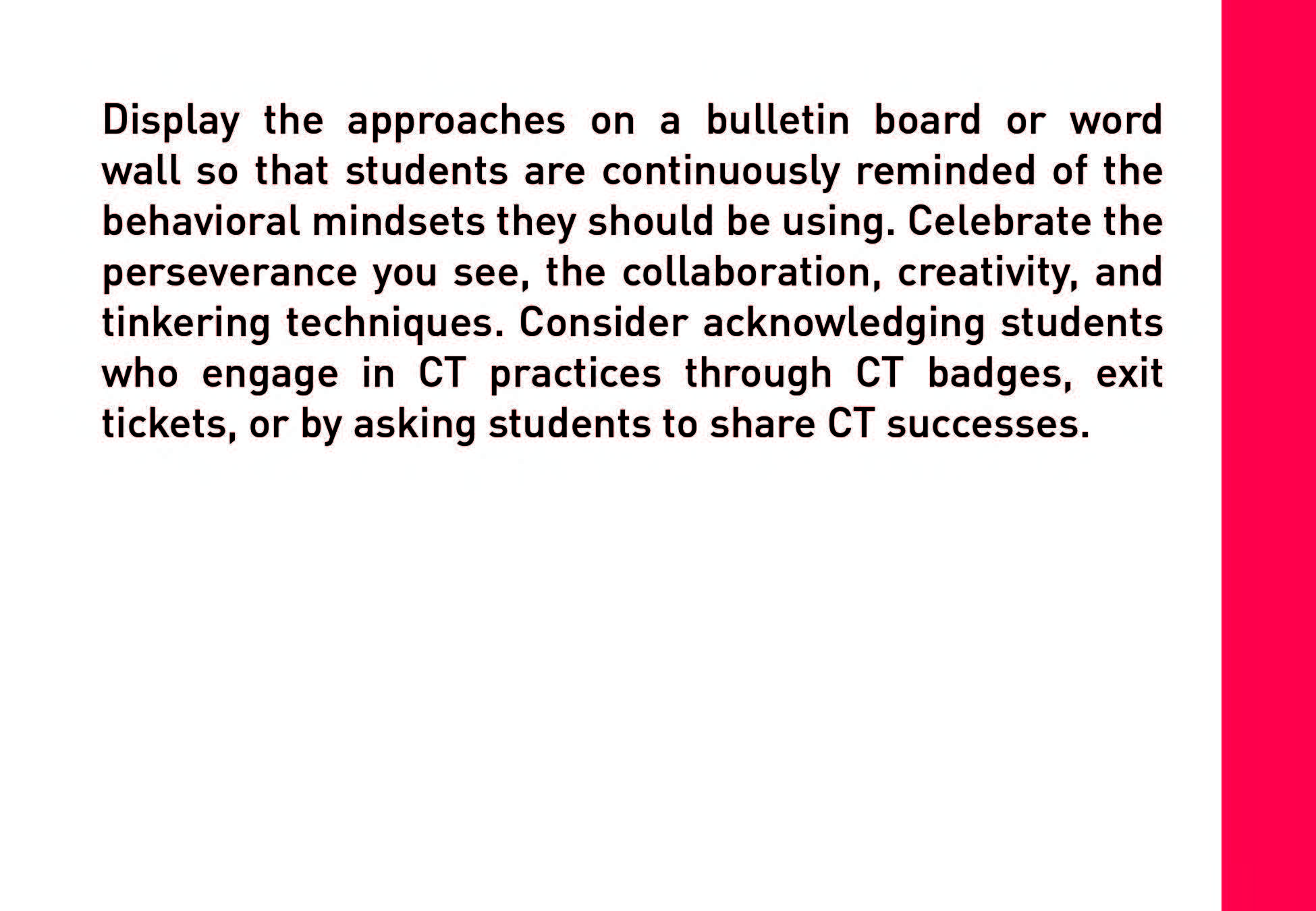
Celebrate CT Approches
Solve Problems with CT
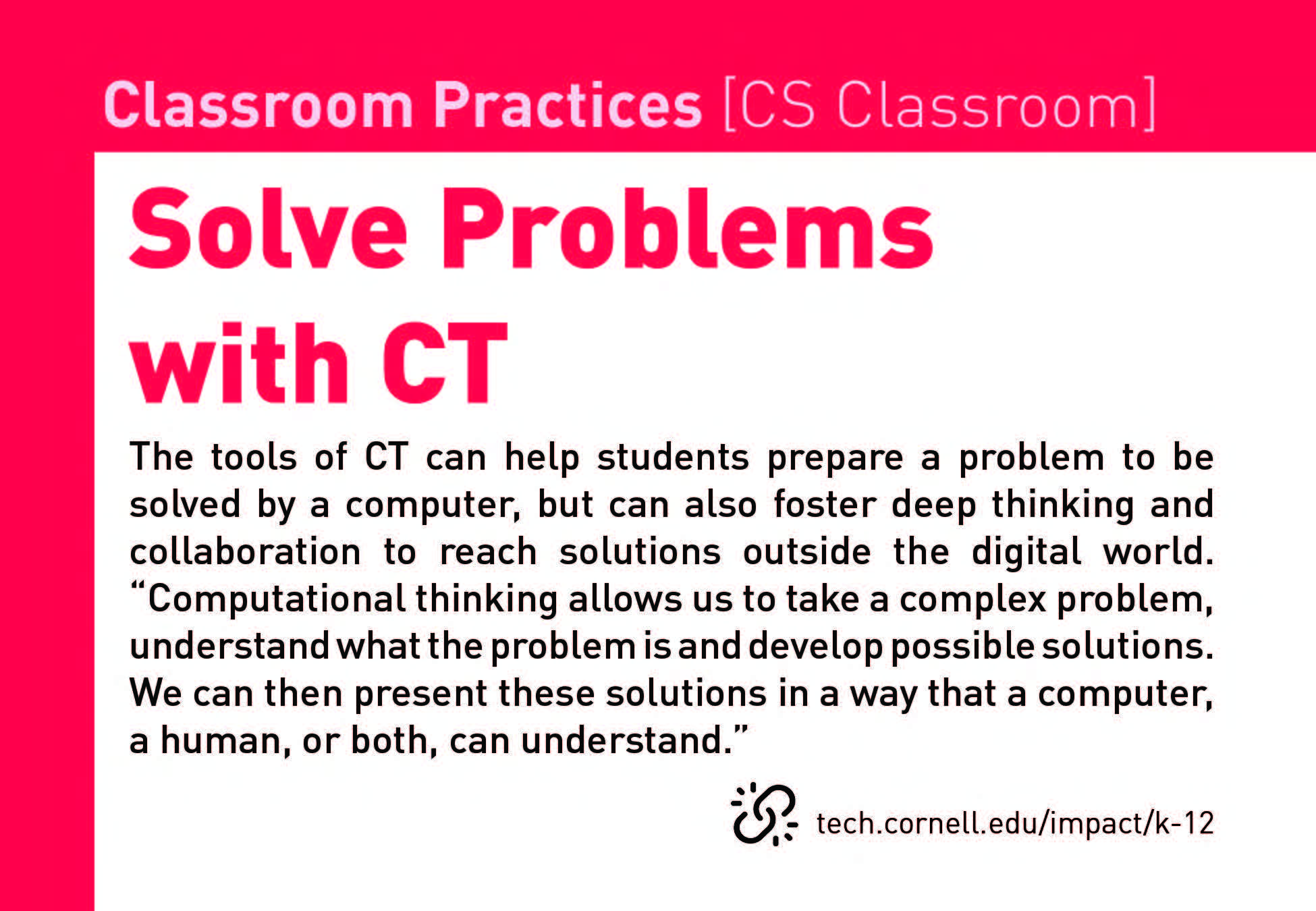
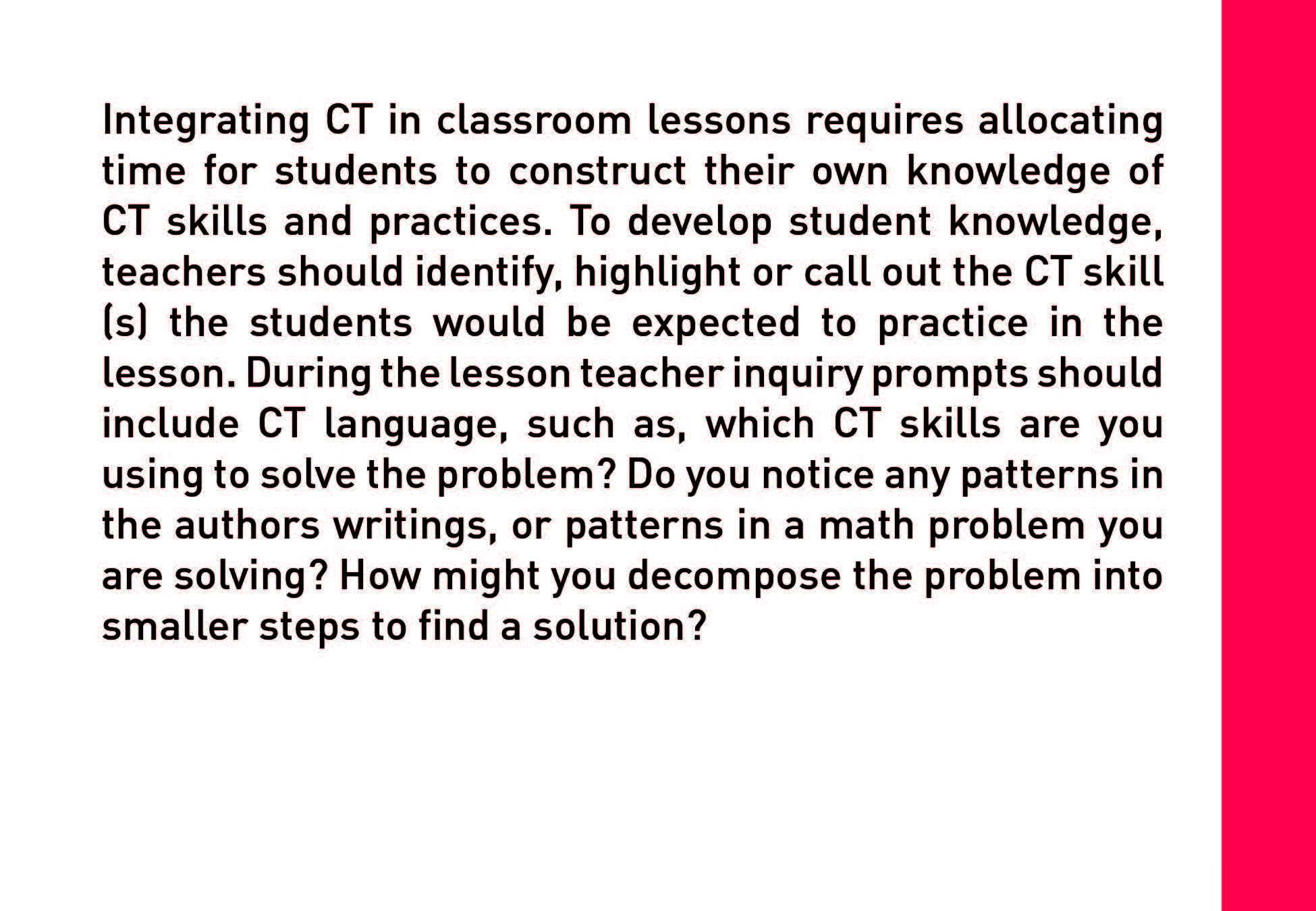
- “Computers can be used to help us solve problems. However, before a problem can be tackled, the problem itself and the ways in which it could be solved need to be understood. Computational thinking allows us to do this…(it) allows us to take a complex problem, understand what the problem is and develop possible solutions. We can then present these solutions in a way that a computer, a human, or both, can understand. https://www.bbc.co.uk/bitesize/guides/zp92mp3/revision/1
- https://www.researchgate.net/figure/Computational-thinking-Computing-at-School-Barefoot-Computing-2016_fig3_315696244
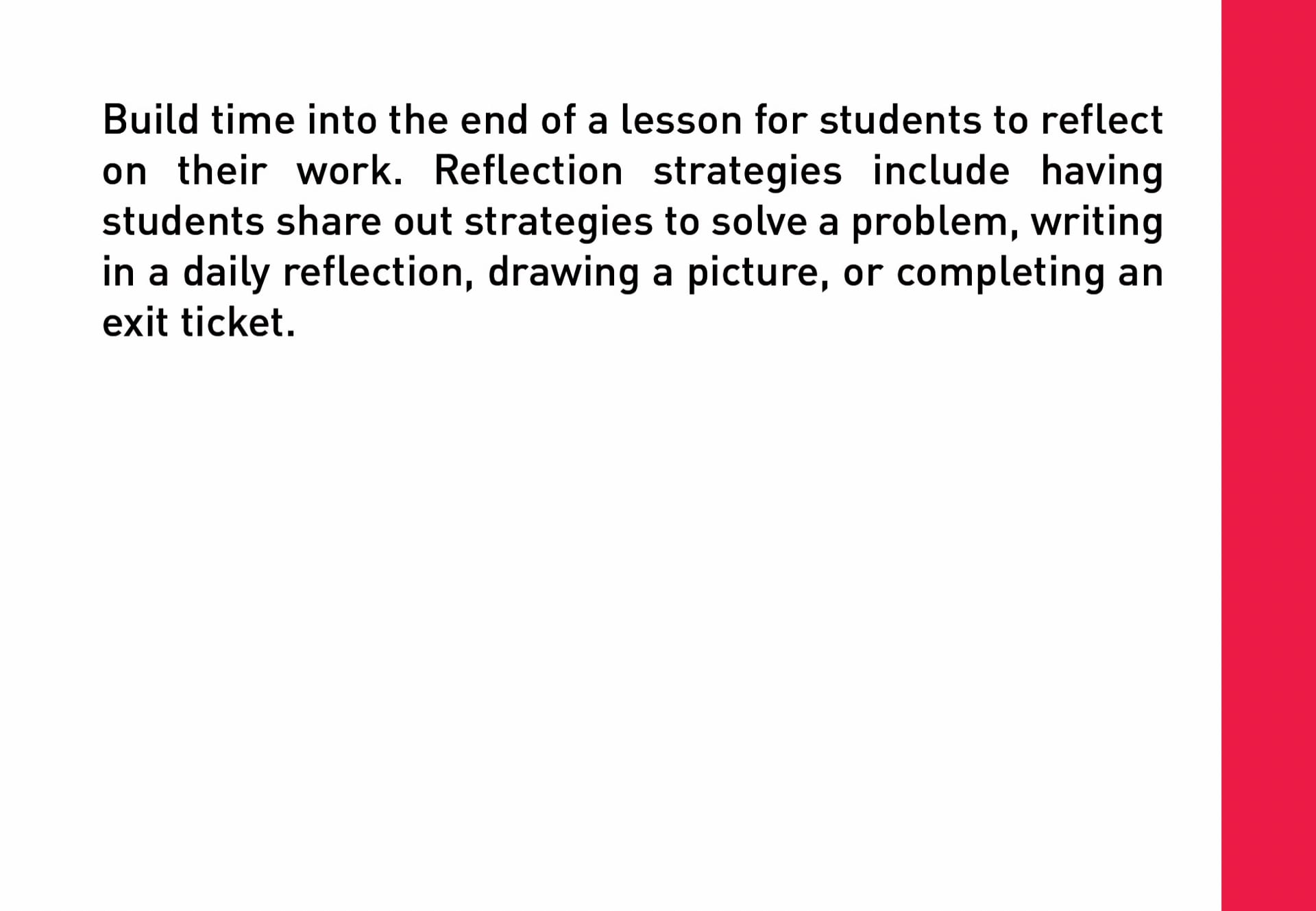
Reflection
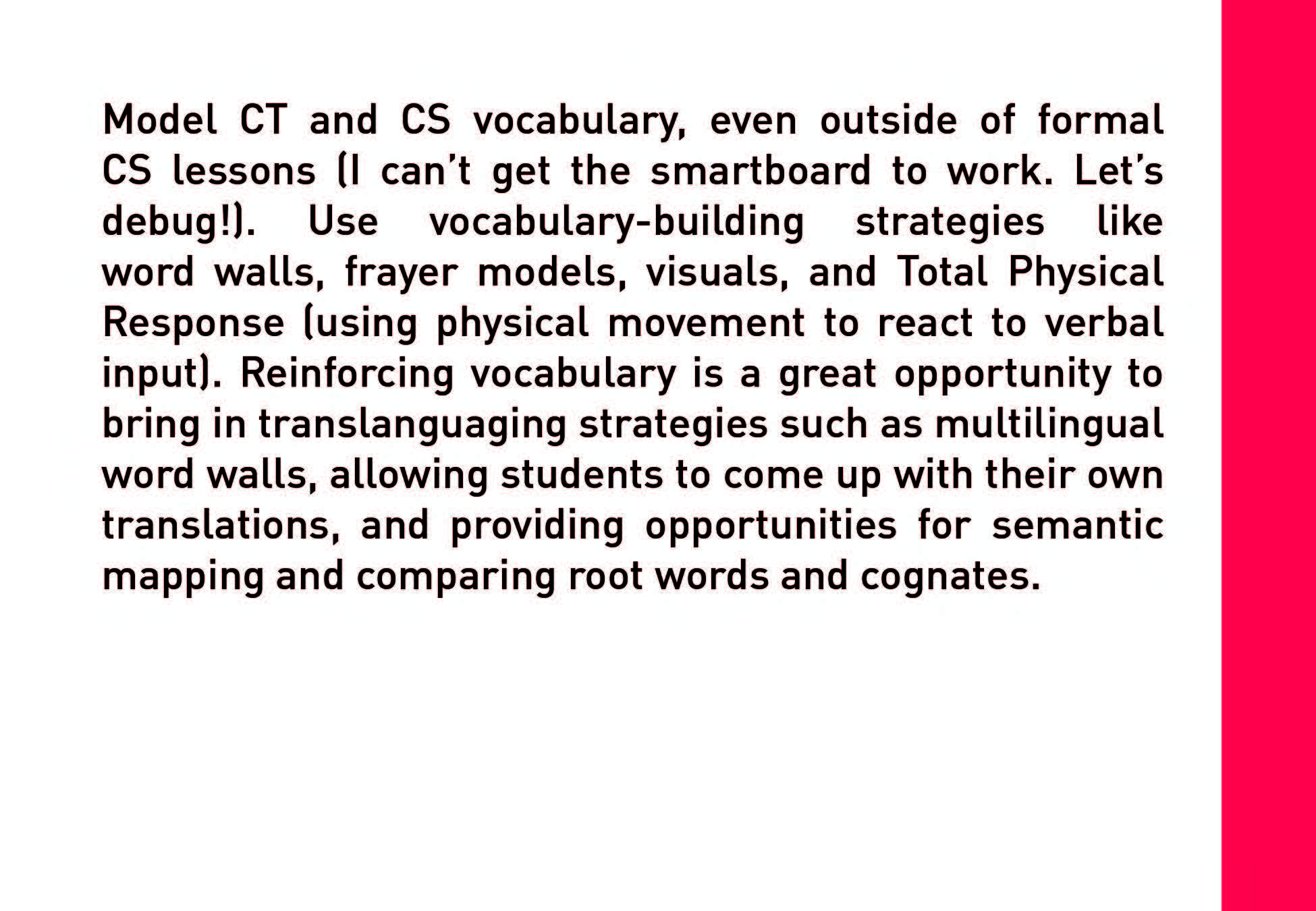
Modeling Use of CT/CS Vocabulary
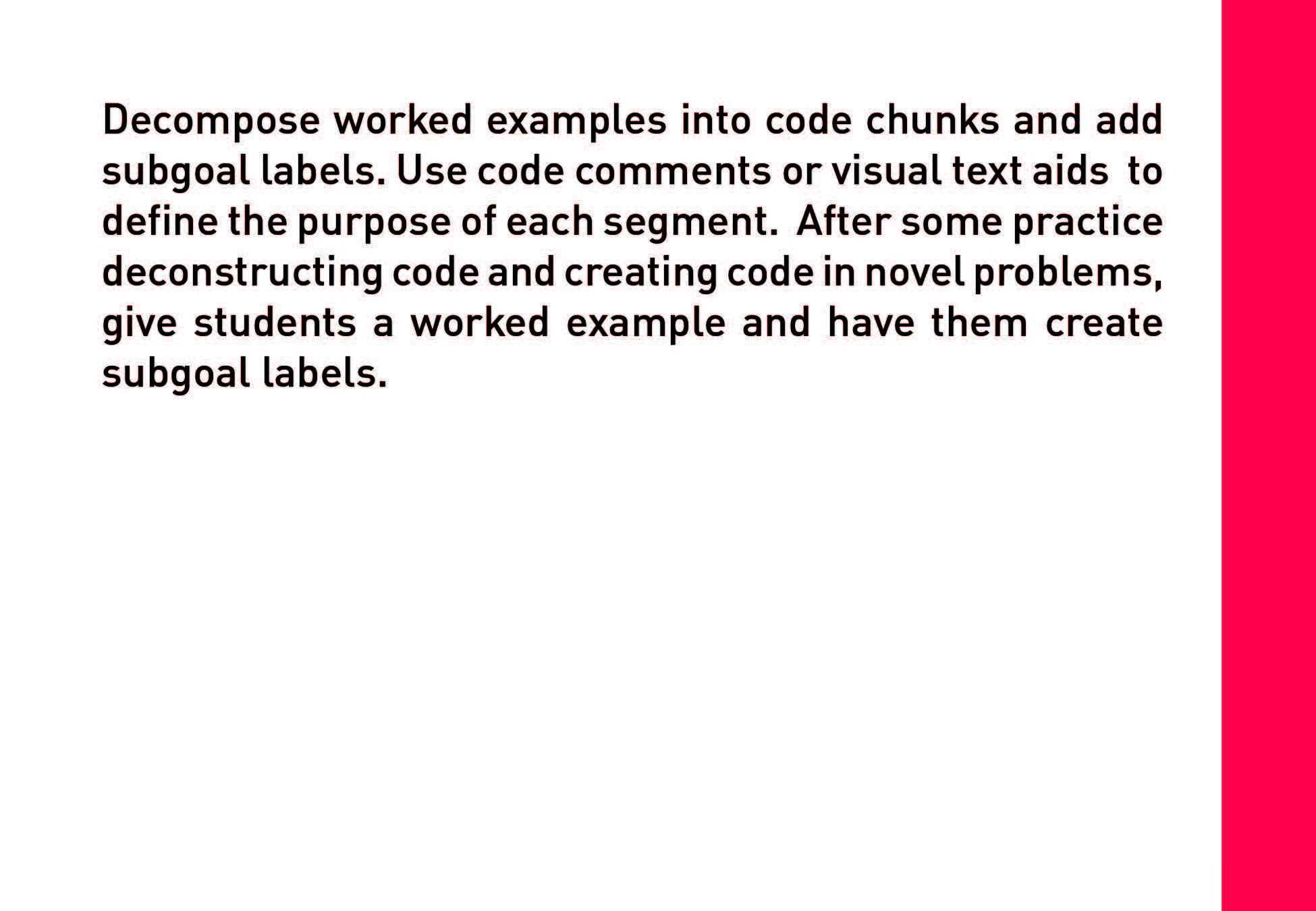
Subgoal Labeling
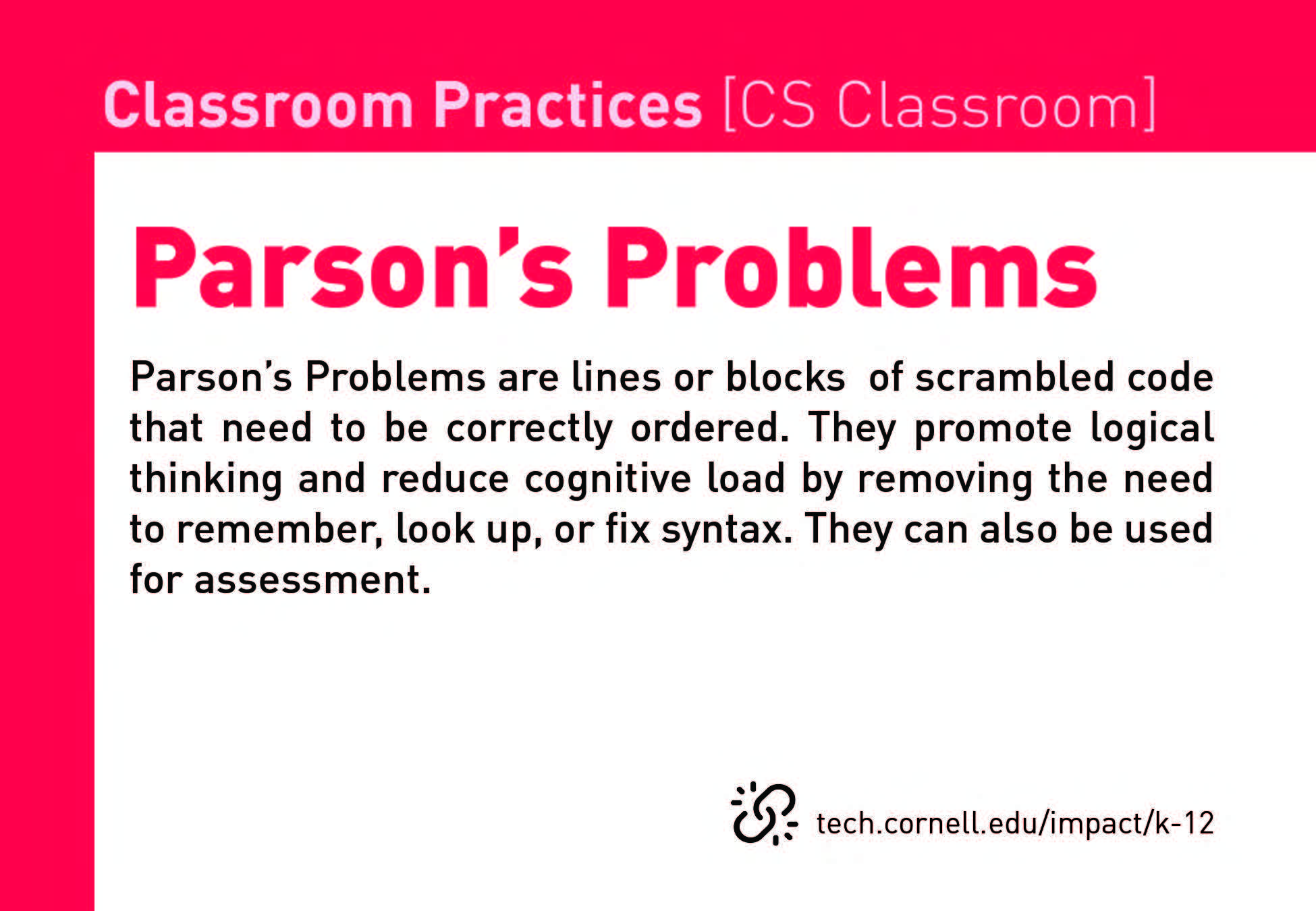
Parson's Problems
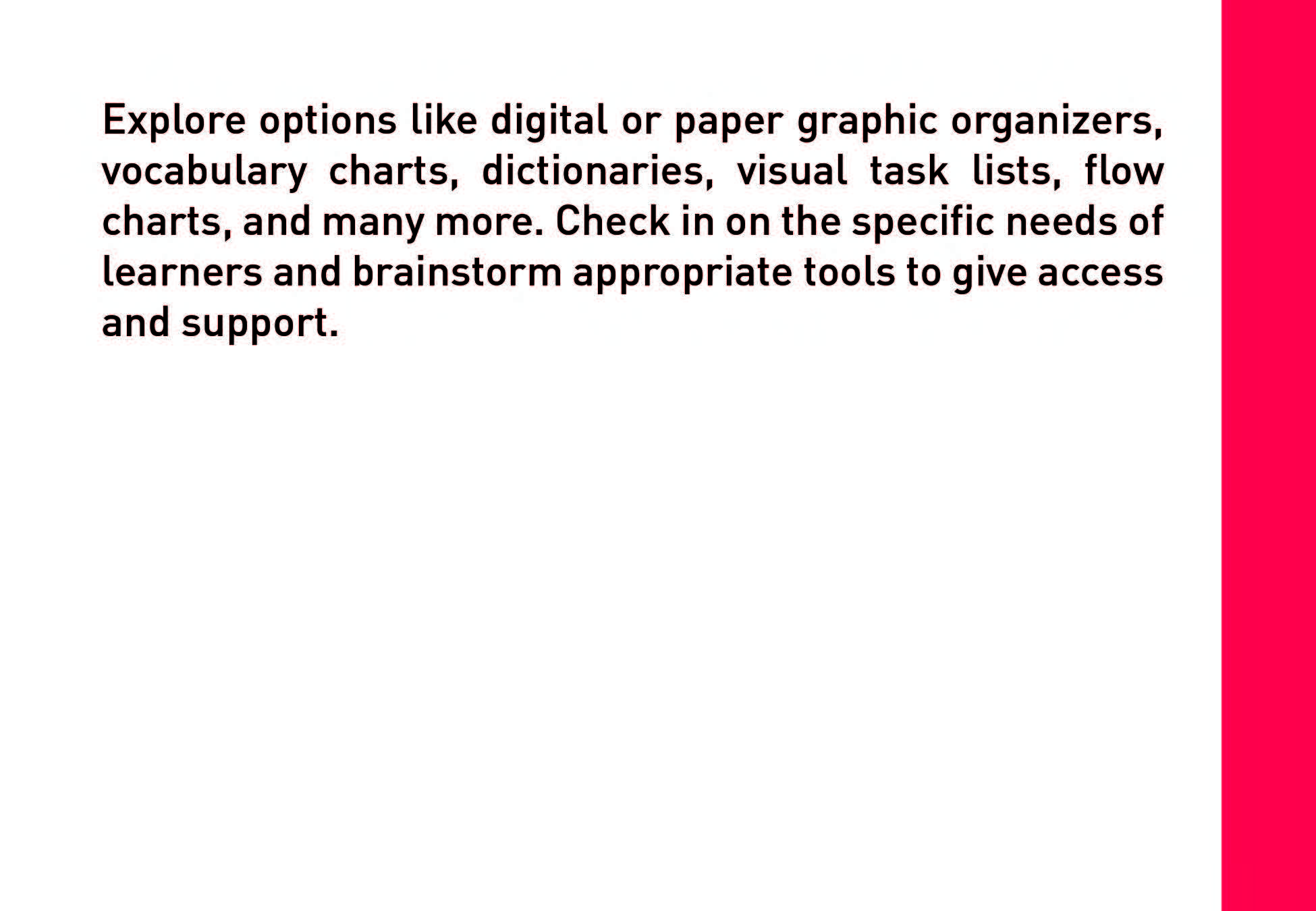
Instructional Tools
Collaborative Culture
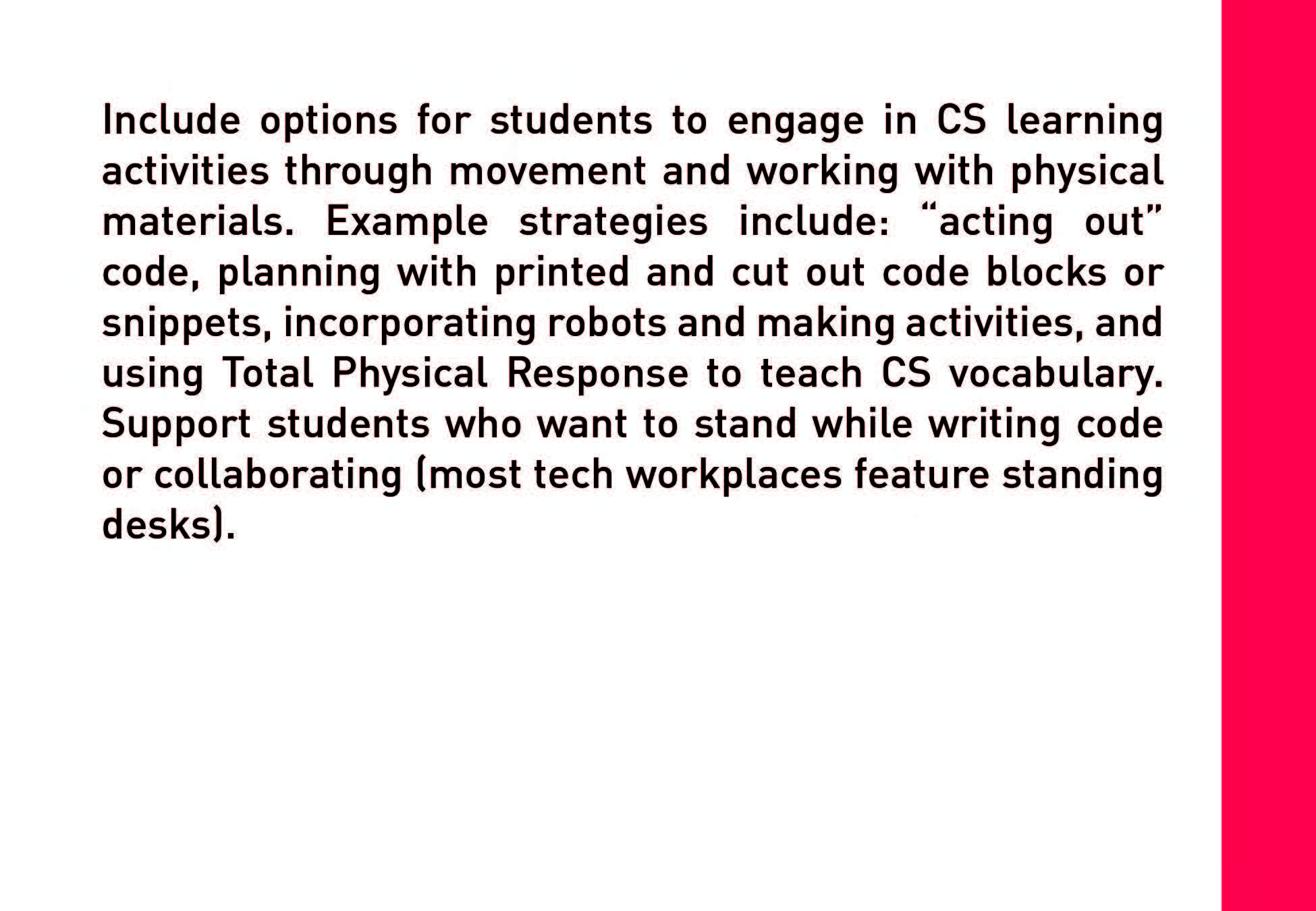
Kinesthetic Learning Strategies
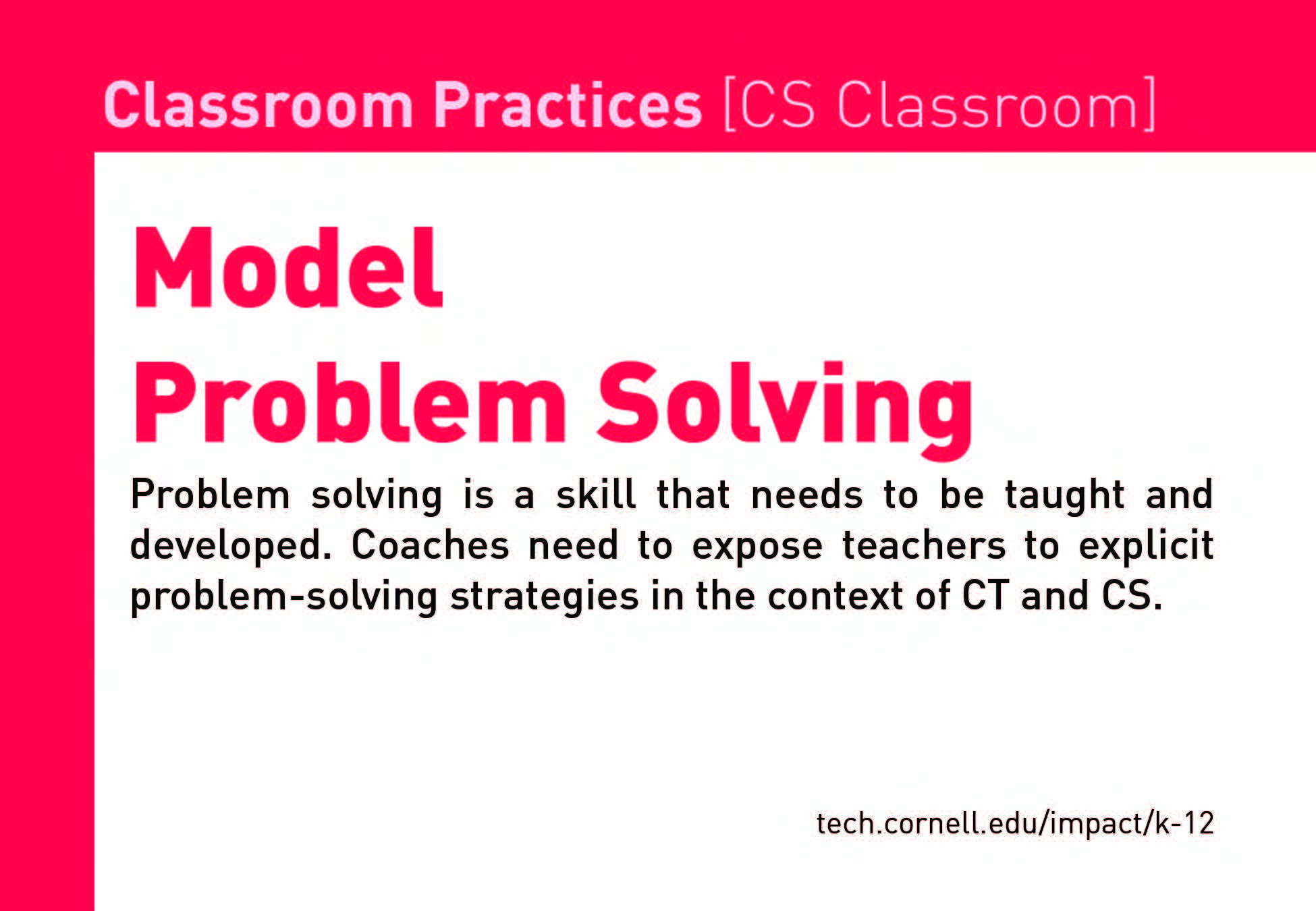
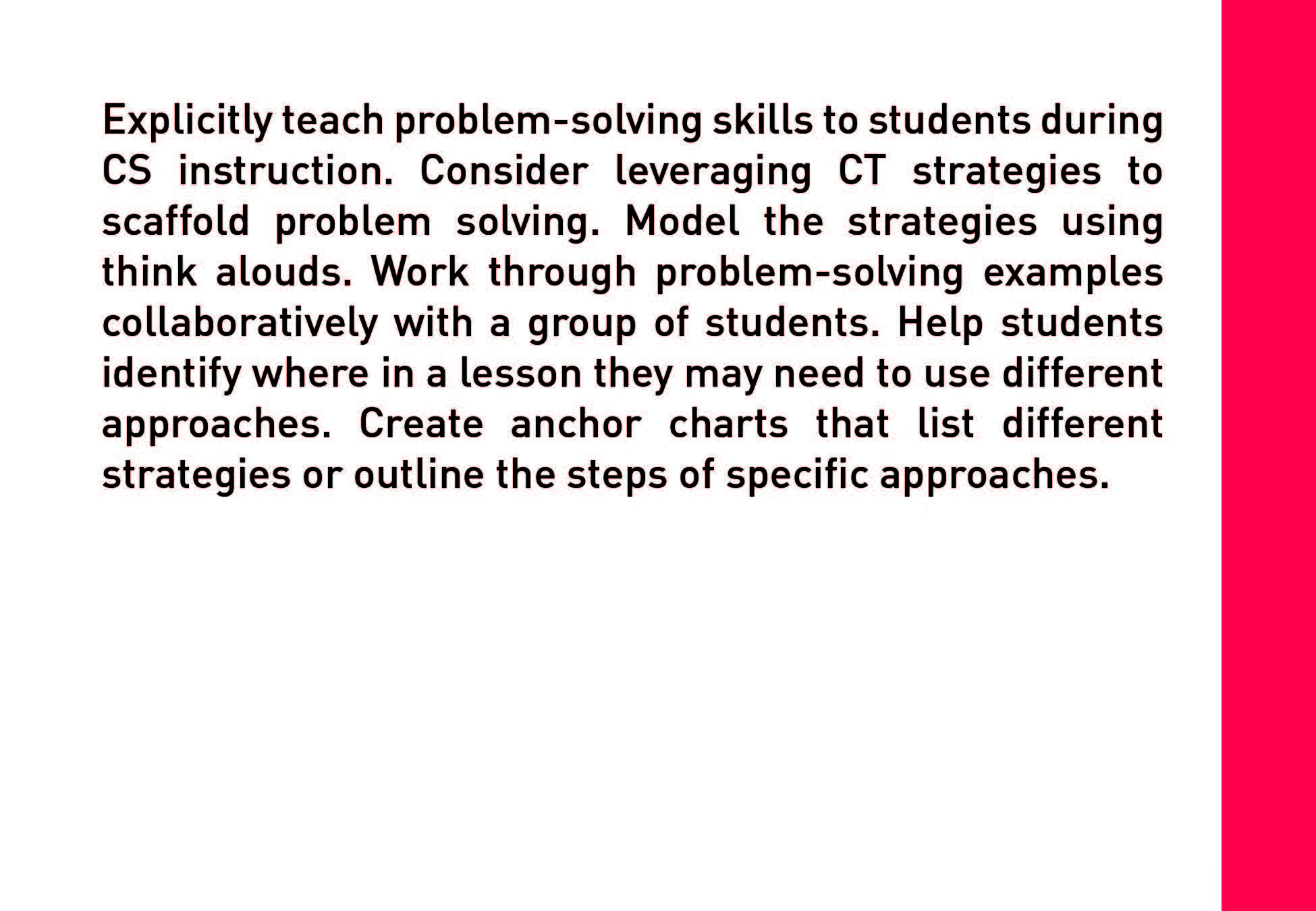
Model Problem Solving
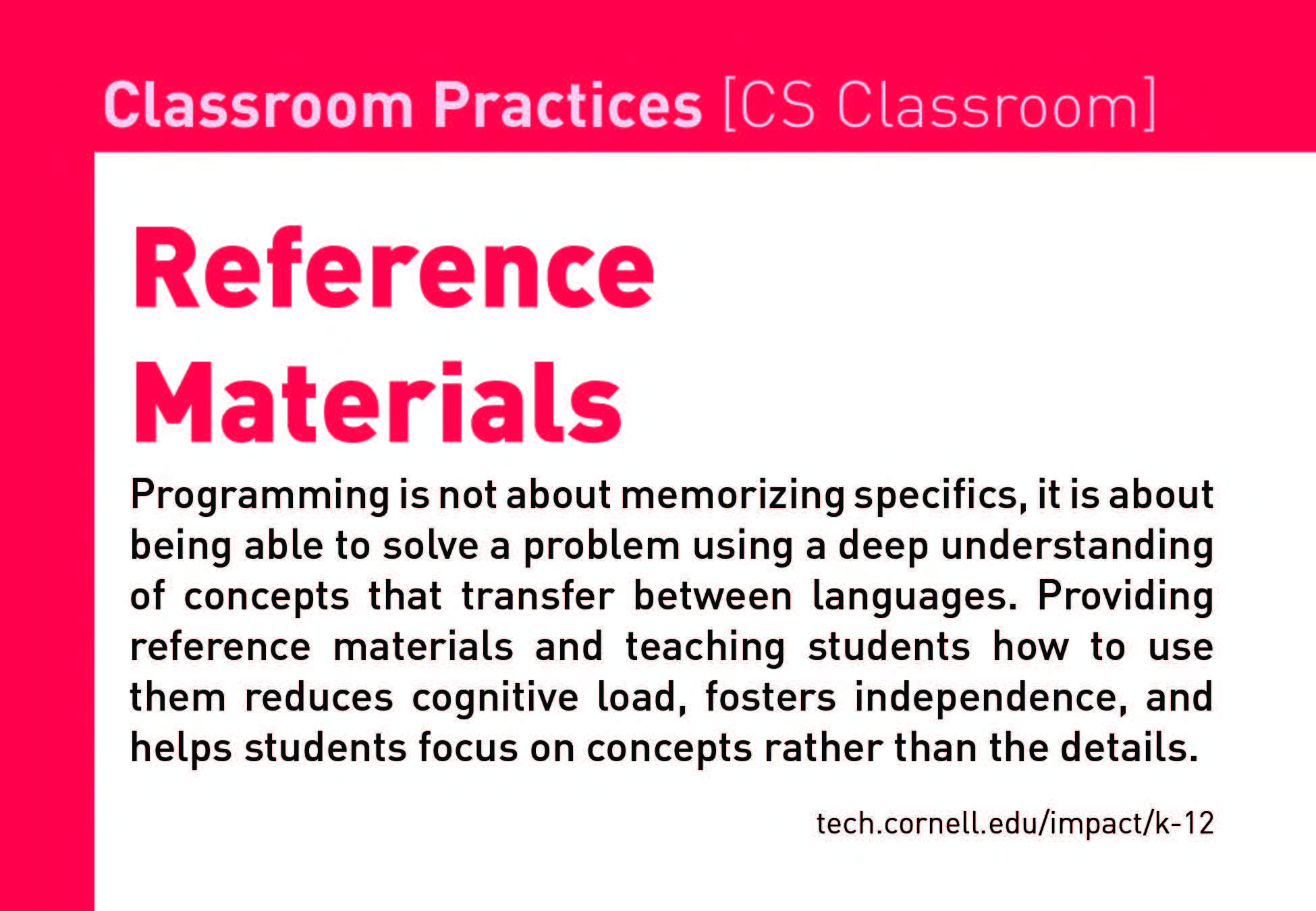
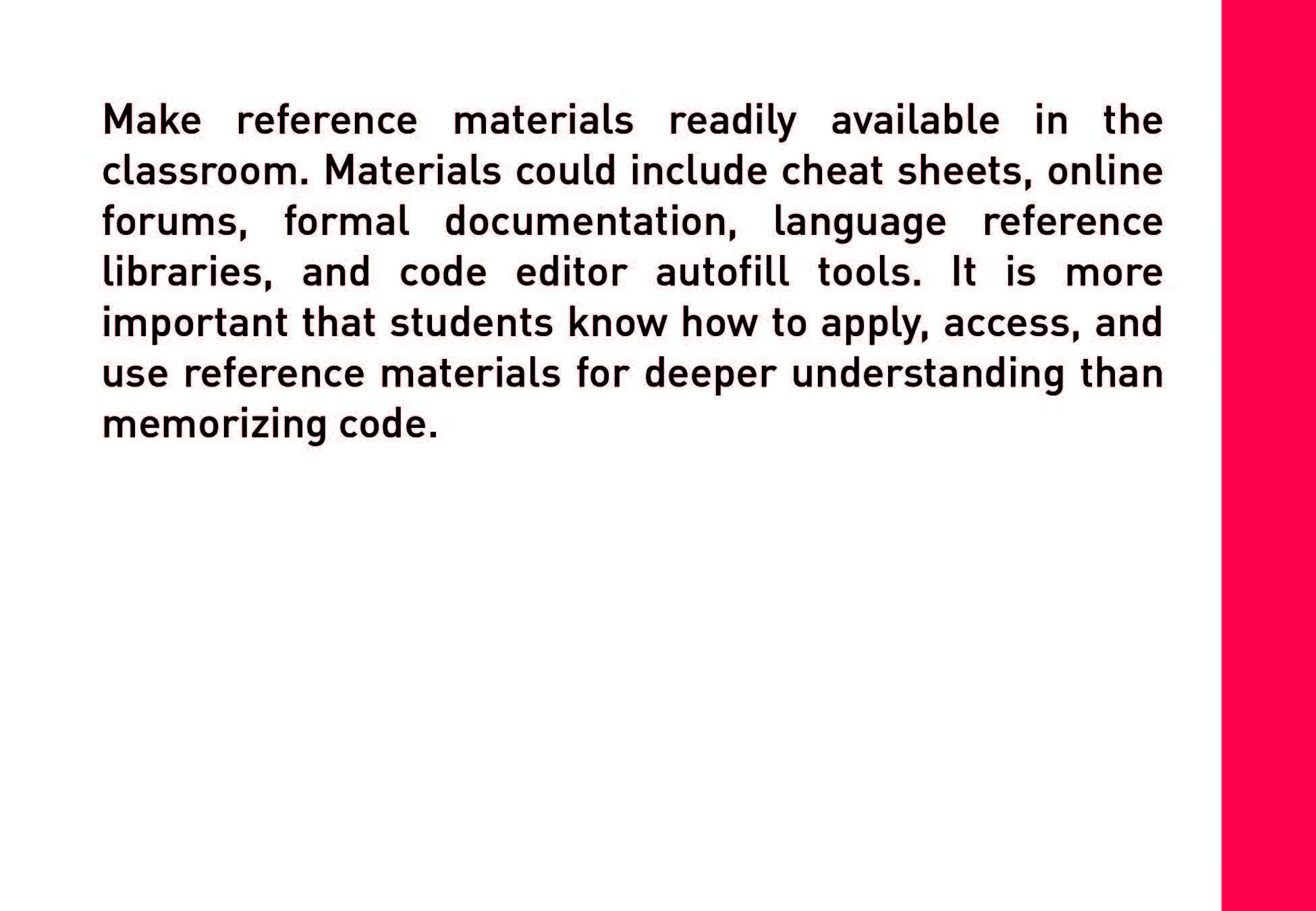
Reference Materials
Exploded Code
Flowcharts
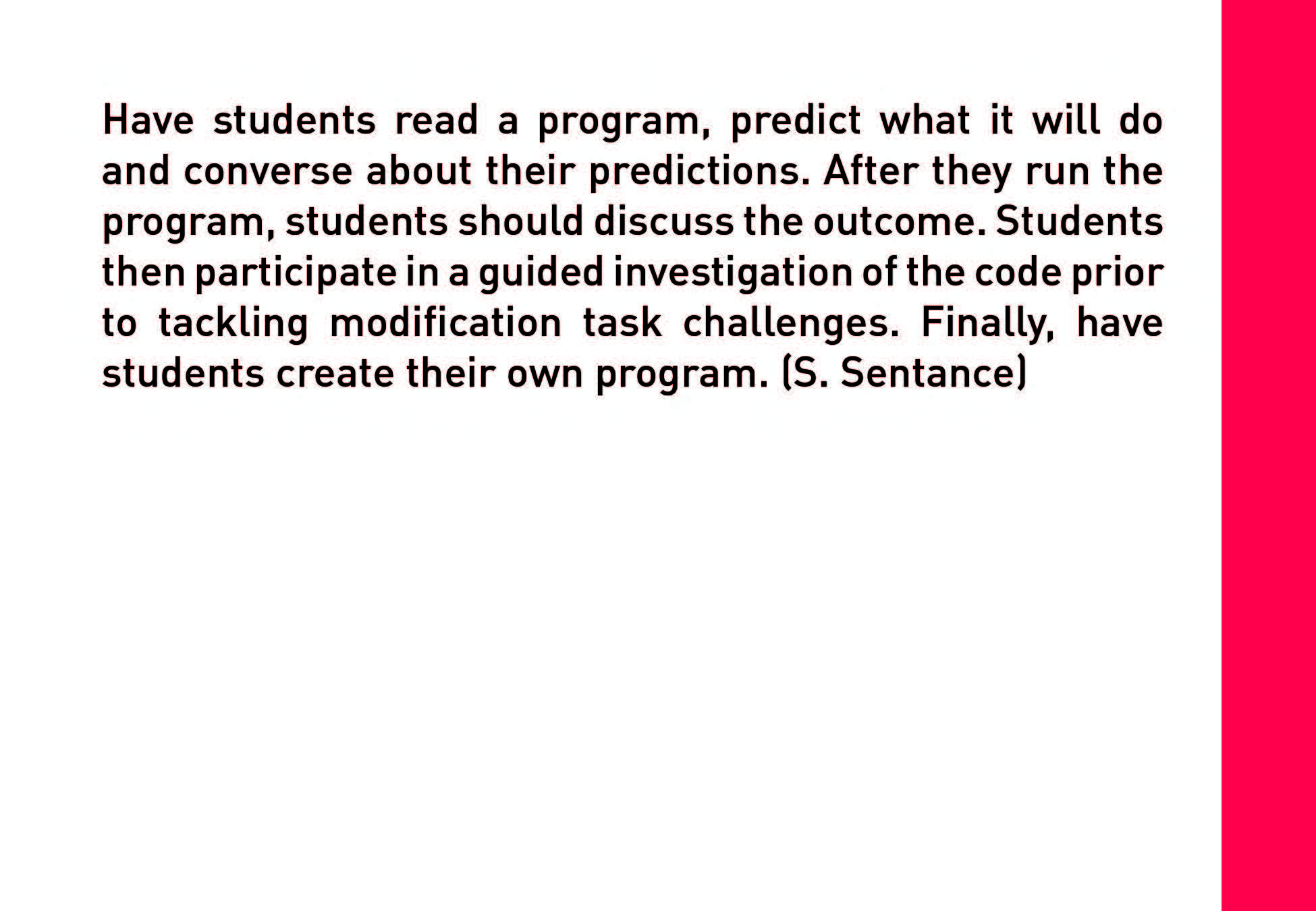
Reading Code
Curriculum Mash-Up
Concrete Representational-Abstract (CRA)
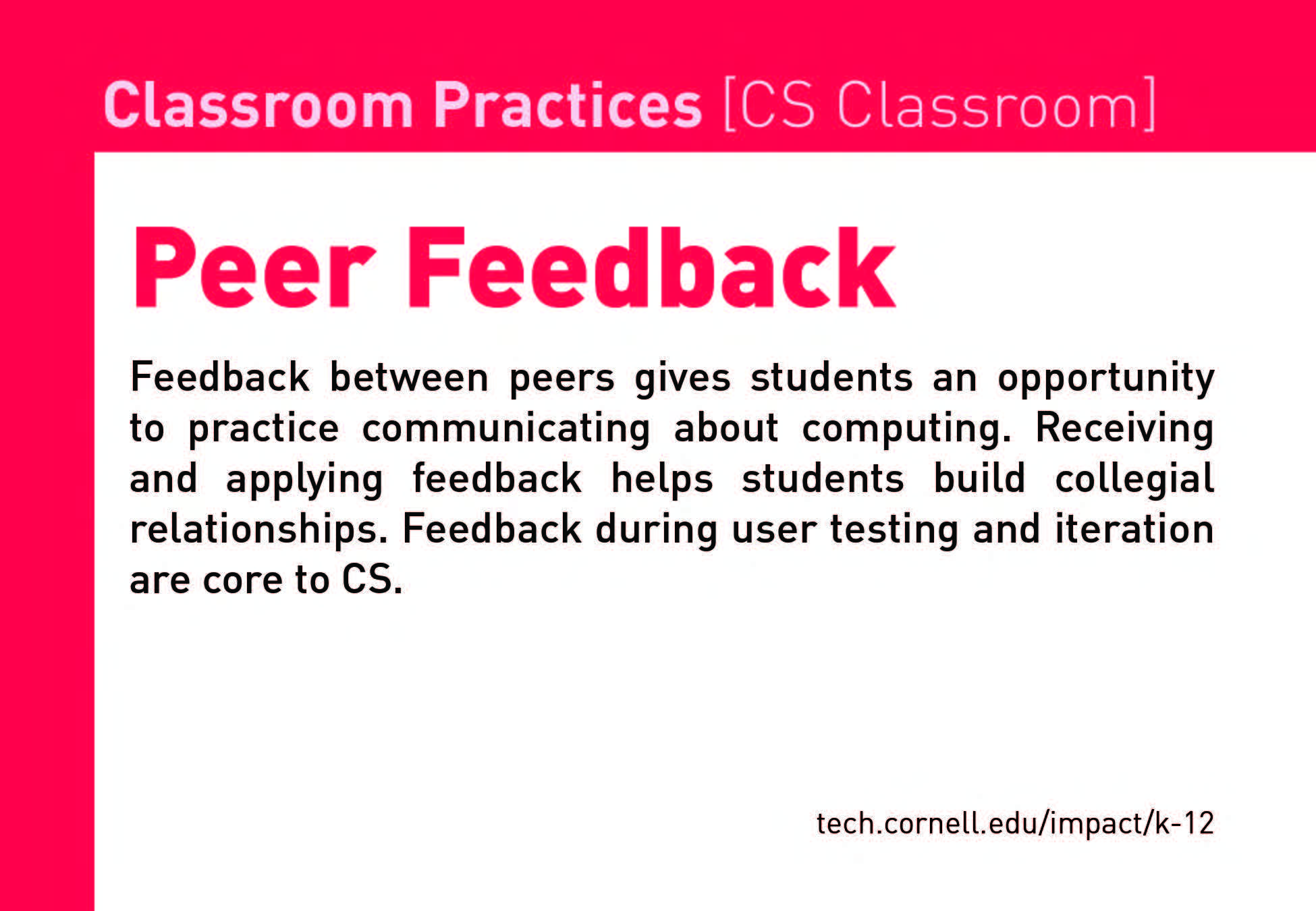
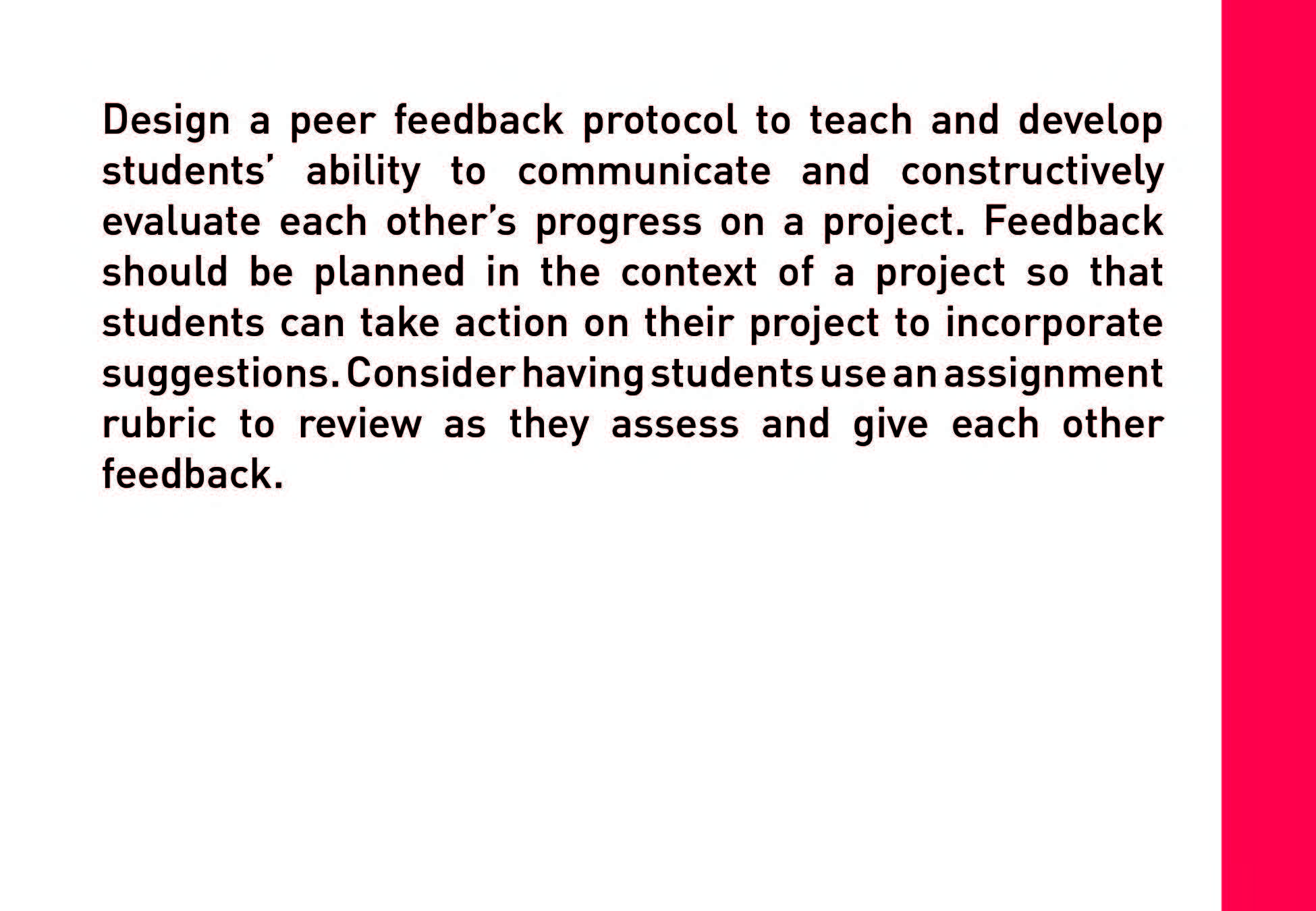
Peer Feedback
PRIMM
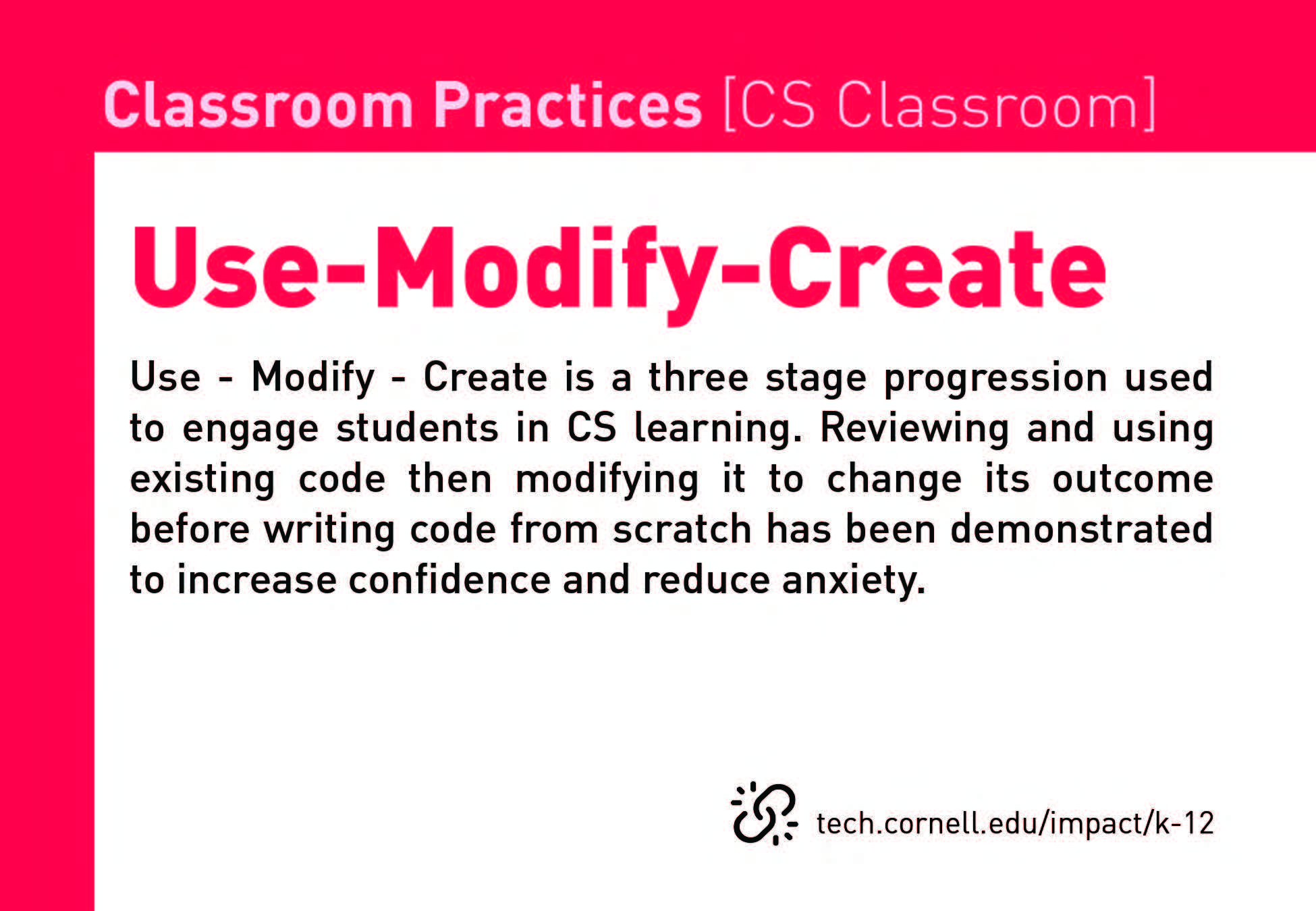
Use-Modify-Create
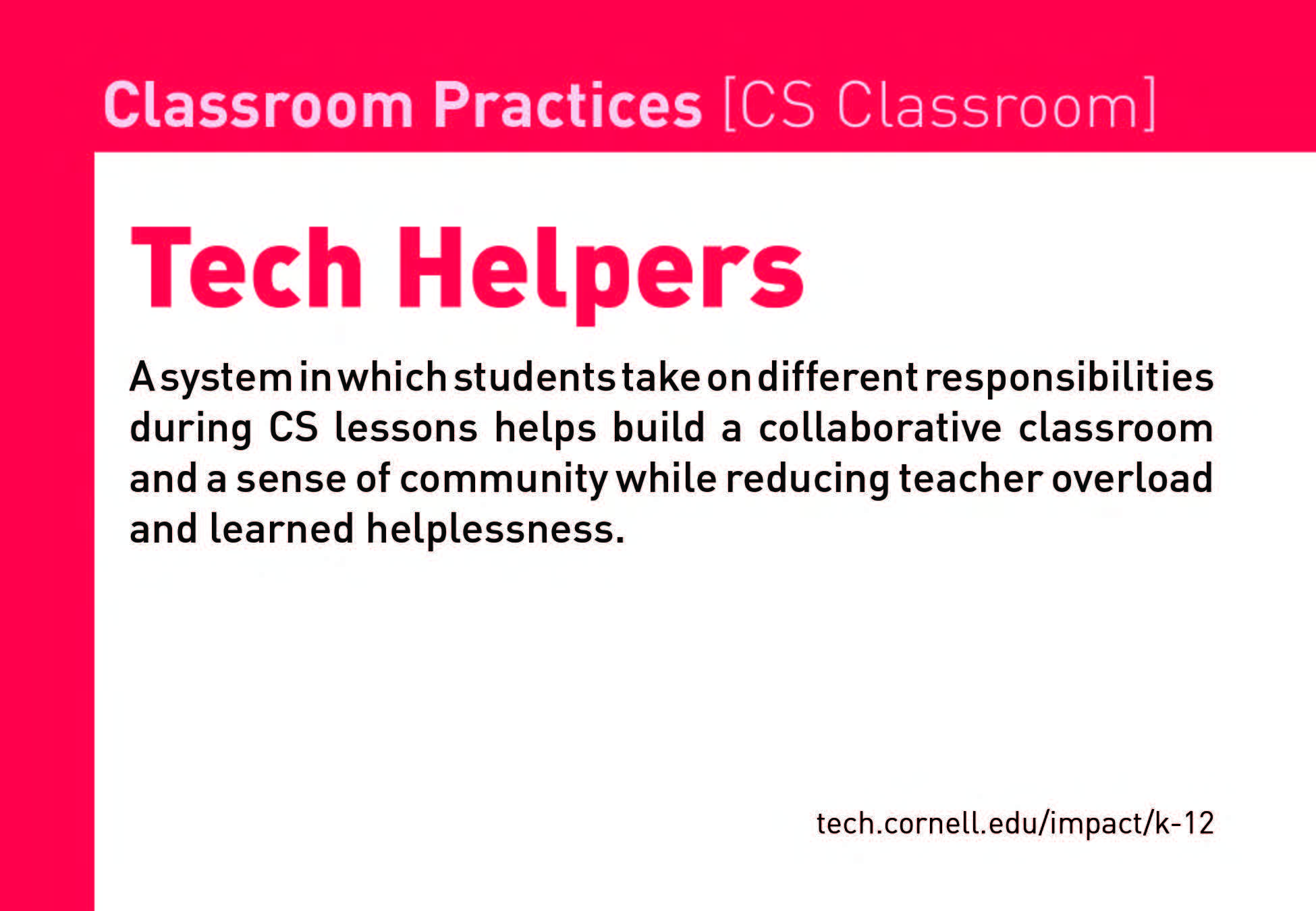
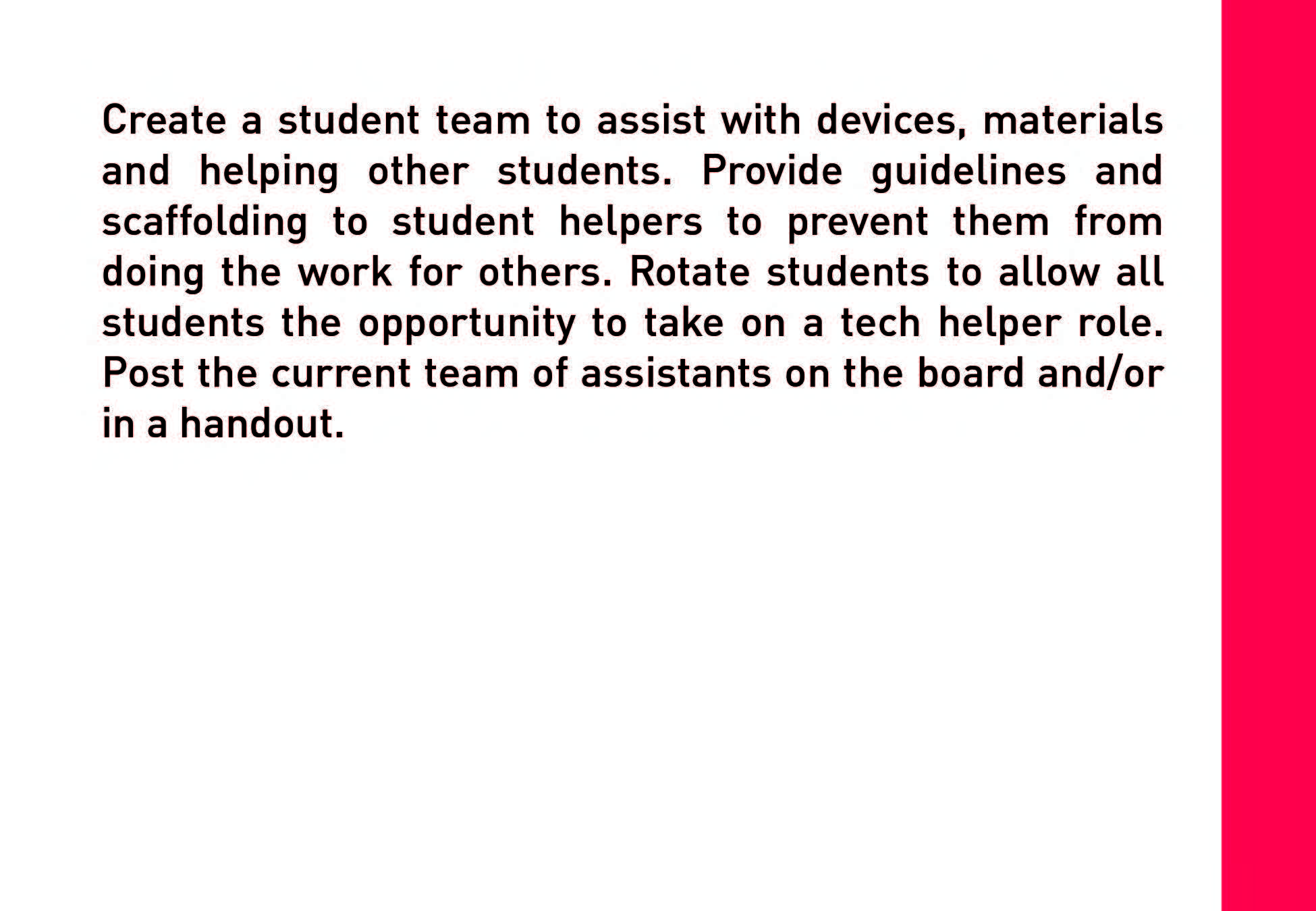
Tech Helpers
Tracing Code
Zone of Proximal Development (ZPD)