Cornell Tech Professor’s Startup Receives $1.75 Million to Improve AI Efficiency
Categories
By Douae Maarouf
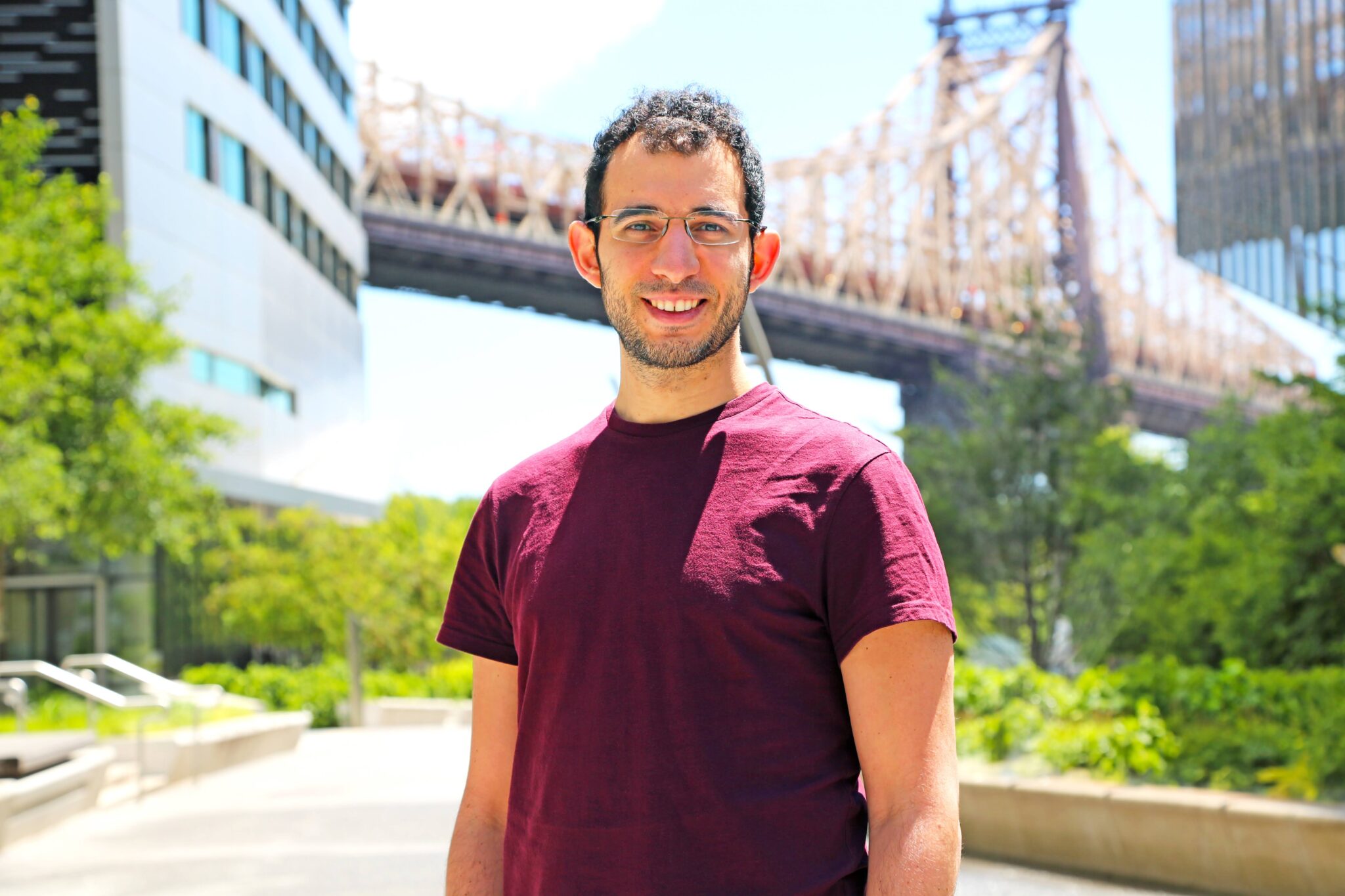
Makora, a startup co-founded by Cornell Tech assistant professor Mohamed Abdelfattah, has received a $1.75 million award from the National Science Foundation-supported STRIDE Ventures AI Efficiency Challenge to help make artificial intelligence faster and less costly to run.
The startup will use the funding to deploy its technology with data center providers, demonstrating how automated software improvements can get more out of existing computing resources. As AI becomes part of everyday life, those gains could help limit the energy needed to meet growing demand.
Makora is based at The Bridge on the Cornell Tech campus, a state-of-the-art flexible workspace for entrepreneurs, early and mid-stage ventures, and more established companies. The award supports the commercial deployment of Makora’s technology, complementing Abdelfattah’s research on future AI systems at Cornell.
“My work at Cornell is to research the next frontier of efficient AI technologies, while my startup is about deploying efficient AI to customers in the real world,” said Abdelfattah, who is also affiliated with the Cornell David A. Duffield College of Engineering.
Makora’s work focuses on inference, the process of running a trained AI model to respond to a request. Each time someone asks an AI tool to answer a question or generate code, the model uses computing resources to produce its response. Making that process more efficient could help organizations serve more users with the hardware they already have.
But efficiency is a moving target. New AI models, computing chips and algorithms continually change how software needs to run.
“Efficiency optimization is a constant ‘game,’” Abdelfattah said. “We need to redeploy AI models whenever a new AI model comes out, or a new computing chip comes out, or a new algorithmic innovation is published.”
Each combination presents a different engineering challenge. Software optimized for one model and chip may need further adjustments to perform well on another, creating an expanding workload for the engineers responsible for those systems.
Makora aims to automate that work. The company uses large language models to generate GPU kernels, specialized code that tells graphics processing units (GPUs) how to carry out computations. Its MakoraSwarm platform extends that automation to performance optimization across the software system, while its MakoraInference service delivers optimized AI models to customers.
“This large matrix of deploying different AI models and algorithms on different AI computing chips is complex and ever-changing, and we need a very high level of automation just to keep up with all of these changes, and extract the highest performance out of every AI deployment,” Abdelfattah said.
He added that greater efficiency could deliver faster responses, lower costs and more hardware options, making AI more widely available as demand grows and computing and energy resources remain limited.
Makora will use the funded deployments to demonstrate how its automated approach can improve the performance of AI systems in practice.
“The technology is extremely useful, and we’re barely scratching the surface of what AI can achieve – it needs to be super efficient to scale,” he said.
Douae Maarouf is the student writer for Cornell Tech.