Cornell Tech’s New Faculty Are Changing How AI Learns, Reasons, and Solves Problems
By Grace Stanley
Six new faculty members will join Cornell Tech during the coming year, bringing expertise in artificial intelligence, machine learning, programming languages, and operations research at a pivotal moment for the future of computing. Their work tackles some of the field’s most pressing questions: How can AI systems become more trustworthy, adaptable, and efficient? How can they learn from data more responsibly and sustainably? And how can advances in computing drive breakthroughs across science, industry, and society?
These new faculty have already begun shaping the direction of modern AI, including the creation of a programming language for high-performance computing, benchmarks that have become a standard for evaluating machine “unlearning,” and AI systems that can reason more effectively, learn from experience, and accelerate scientific discovery.
Their work has earned recognition from leading conferences and some of the field’s most competitive fellowships and awards, including the Quad Fellowship, OpenAI Research Award, and Association for Computational Linguistics Outstanding Paper Award.
“We’re thrilled to welcome this exceptional cohort of faculty to Cornell Tech,” said Greg Morrisett, Jack and Rilla Neafsey Dean and Vice Provost of Cornell Tech. “These scholars have already established themselves as leaders in fields ranging from machine learning and AI safety to programming systems and operations research, producing work that is influencing both academic research and industry practice. Their arrival builds on Cornell Tech’s momentum and deepens our ability to tackle the technological challenges that will define the coming decades.”
Together, these scholars are helping build a future in which AI is more capable, reliable, and impactful across science, industry, and society. Read more about their accomplishments below.
Meet the New Faculty at Cornell Tech
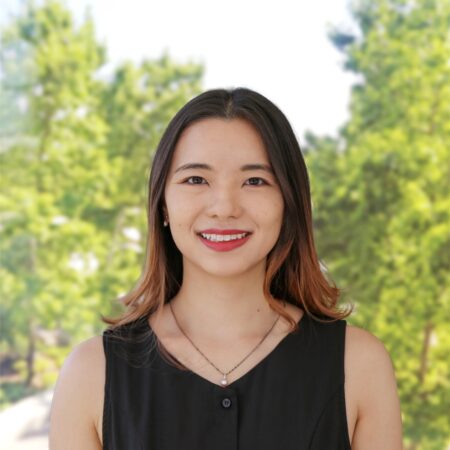
Yuka Ikarashi (starting January 2027)
Assistant professor of computer science at Cornell Tech and the Cornell Ann S. Bowers College of Computing and Information Science
Ikarashi’s research focuses on compilers and programming languages for high-performance computing. She is the creator of the Exo programming language for writing high-performance code on hardware accelerators. Ikarashi has received the Quad Fellowship, Masason Foundation Fellowship, Funai Foundation Fellowship, ML and Systems Rising Stars Award, and Rising Stars in EECS Award. She has previously worked at Apple, Amazon, and CERN, applying her research to a range of accelerators and applications. Ikarashi earned her Ph.D. and M.S. from the Massachusetts Institute of Technology and her B.S. from the University of Tokyo.
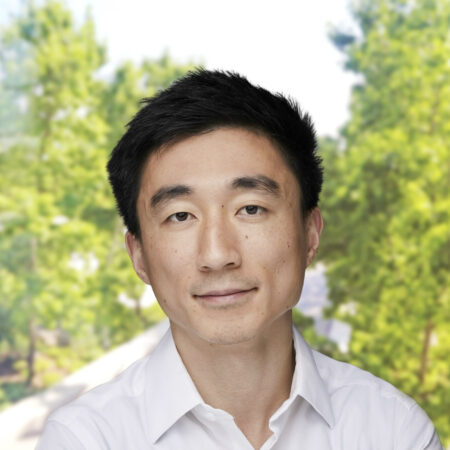
Will Ma (starting July 2027)
Associate professor of operations research and information engineering at Cornell Tech and the Cornell David A. Duffield College of Engineering
Ma’s research focuses on decision-making under uncertainty, online algorithms, and AI agents for operations research. He is recognized for contributions to revenue management, online matching, inventory management, learning theory, e-commerce fulfillment, neural network verification, and related areas. Algorithms from his research have been deployed at companies including Alibaba, Bed Bath & Beyond, and Dream11. Before joining Cornell Tech, Ma was the Roderick H. Cushman Associate Professor at Columbia Business School and earned his Ph.D. from the Massachusetts Institute of Technology. His industry experience includes roles at Google, Jane Street, and Percepta.ai. He also founded a startup focused on strategy games and was previously a professional poker player.
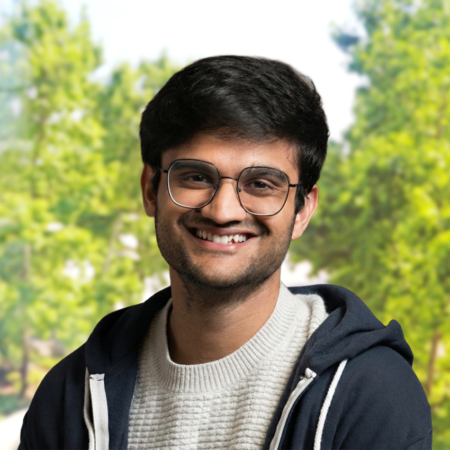
Pratyush Maini (starting January 2027)
Assistant professor of computer science at Cornell Tech and the Cornell Ann S. Bowers College of Computing and Information Science
Maini studies how the data used to train AI systems shapes what they learn, remember, and how reliably they behave. His research focuses on data-centric AI, including improving pretraining data, generating synthetic data, and understanding and mitigating unwanted memorization in foundation models. His work on synthetic data and AI safety has informed practices at leading AI labs, while his benchmarks for machine unlearning have become widely used throughout the field. Before joining Cornell Tech, Maini earned a Ph.D. in machine learning from Carnegie Mellon University and was a founding member of DatologyAI, where he works on democratizing data curation for foundation models. His honors include an OpenAI Research Award, a NeurIPS award nomination, and multiple best paper awards at major conference workshops.
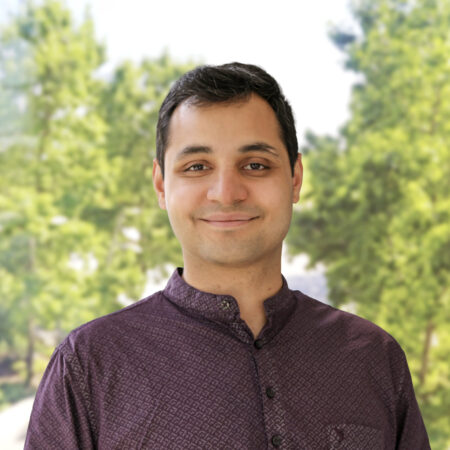
Ayush Sekhari (starting November 2026)
Assistant professor of computer science at Cornell Tech and the Cornell Ann S. Bowers College of Computing and Information Science
Sekhari’s research focuses on reinforcement learning and interactive learning, with the goal of developing machine learning systems that learn efficiently from experience, adapt to new environments, and acquire new capabilities. His work spans reinforcement learning, optimization, machine unlearning and privacy, and AI for science, drawing on both theoretical and empirical methods. Sekhari is currently a senior research scientist at the Chan Zuckerberg Biohub, where he works on AI models for the biological sciences and explores how advances in machine learning can support scientific discovery. He previously held a postdoctoral position at the Massachusetts Institute of Technology and earned his Ph.D. in computer science from Cornell University.
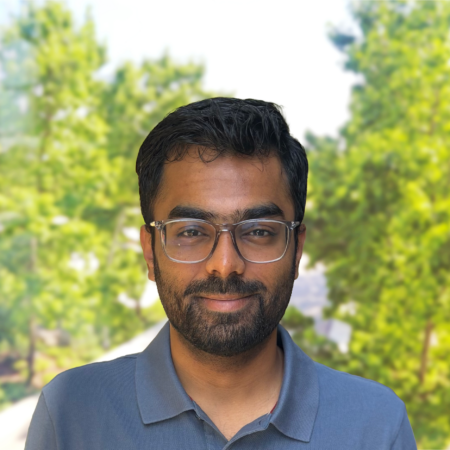
Amrith Setlur (starting July 2027)
Assistant professor of computer science at Cornell Tech and the Cornell Ann S. Bowers College of Computing and Information Science
Setlur’s research focuses on building AI systems that can continually adapt and improve at test time, including foundation models that dynamically scale computing resources for reasoning and exploration as they solve complex problems. He has been recognized with the JPMorgan Chase AI Ph.D. Fellowship, the Carnegie Mellon University School of Computer Science Presidential Fellowship, and the Laude Institute Slingshot Award. His work has been published in leading machine learning venues, including ICLR, ICML, NeurIPS, and AISTATS, and has received multiple spotlight and oral presentation selections as well as workshop best paper awards. Setlur earned his Ph.D. in machine learning from Carnegie Mellon University.
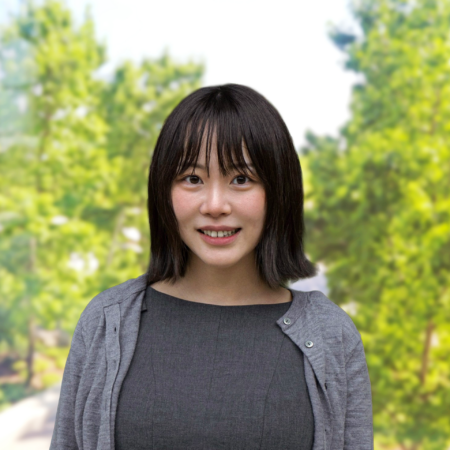
Weijia Shi (starting July 2027)
Assistant professor of computer science at Cornell Tech and the Cornell Ann S. Bowers College of Computing and Information Science
Shi’s research develops augmented and modular architectures and training algorithms that make language models more controllable, collaborative, and factual. Her work has advanced methods for helping AI systems use external tools and specialized models, improving their ability to access information, identify knowledge gaps, and reduce hallucinations. She has also developed widely used AI models and techniques that have been adopted by researchers and integrated into platforms such as Databricks MosaicML, LlamaIndex, and LangChain. Her work received an Outstanding Paper Award at ACL 2024, and she was named a Rising Star in Machine Learning in 2023 and in Data Science in 2024. She earned her Ph.D. from the University of Washington.
Grace Stanley is the editorial lead for Cornell Tech.